Amazon scales warehouse fleet past one million robots
Amazon has expanded its warehouse fleet to over one million robots, accelerating order fulfillment while reshaping workplace safety and hiring projections for human employees.
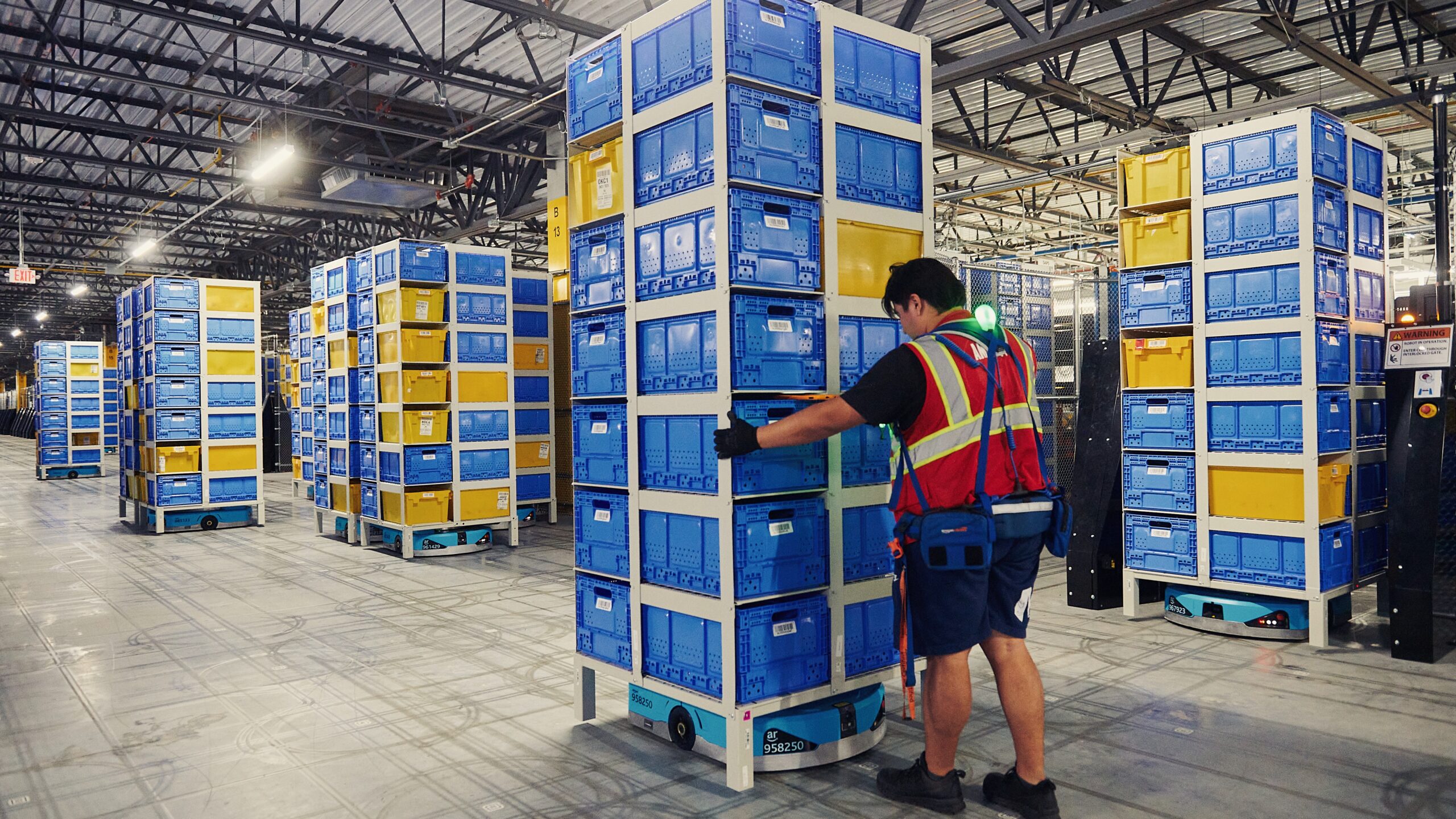
Since acquiring Kiva Systems in 2012, Amazon Robotics has expanded its fleet to over 1 million robots operating alongside 1.5 million human employees to serve 200 million Prime subscribers. Mobile units like Hercules, Titan, and Proteus navigate facilities using DeepFleet AI models to prevent congestion, while the Sequoia inventory system handles items 75 percent faster. Amazon is currently expanding its single-digit thousands fleet of robotic arms, planning to double deployment after an announcement from CFO Brian Olsavsky.
The robotic arm lineup relies heavily on AI. Robin, tested in 2021, used 394,000 picking actions to achieve a 93.73 percent success rate compared to traditional algorithms at 92.28 percent, cutting 16,500 failed picks per 1 million items and cutting failure rates 20 percent in 2-million-pick tests. Cardinal handles packages up to 50 pounds, Sparrow uses foundation models to sort diverse inventory, and Vulcan introduces touch sensors in Spokane, Washington, and Hamburg, Germany, in 2025 ahead of a 2027 rollout.
Automation impacts on the US warehousing sector's 2 million workers remain complex. Amazon cites a 43 percent cut in recordable incidents and 70 percent lower lost-time injuries since 2019. However, an April 2025 ILR Review study analyzing 150 facilities found automated hubs had a 40 percent drop in severe injuries but a 77 percent rise in minor strain injuries, echoing a 1,000-worker survey from 2021. Meanwhile, internal projections reported in October 2025 suggested automation could reduce projected hiring by 160,000 people by 2027 and 600,000 by 2033, offset partly by 30 percent growth in maintenance roles and 300 jobs per new factory.
This is our own summary of reporting by Ars Technica AI