Apple Says OpenAI Employee Used Secret Circuit Schematic
Apple has accused a former engineer of using a confidential circuit schematic to run simulations at OpenAI, highlighting the growing legal risks around proprietary data in AI development.
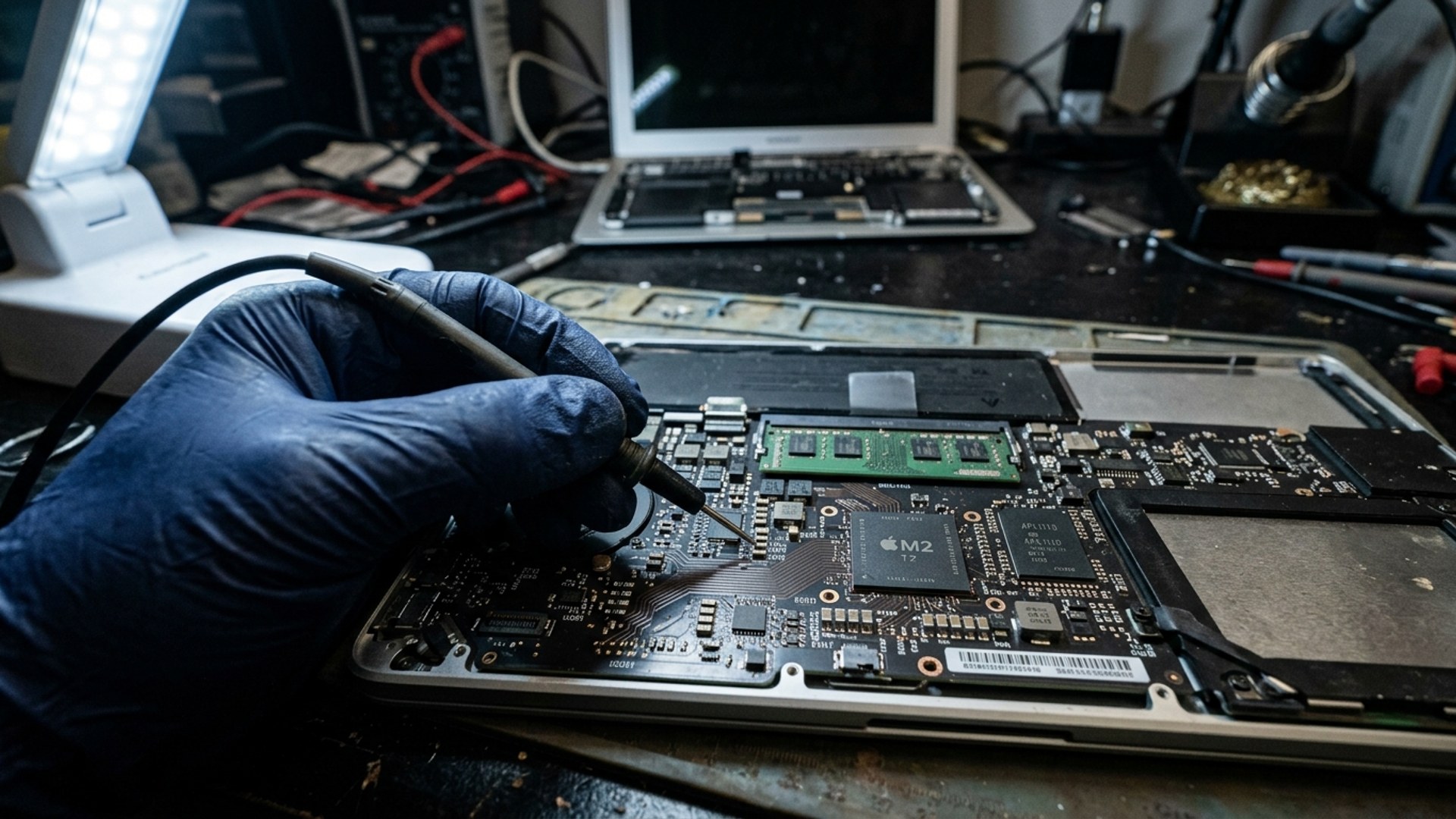
On August 31, 2026, Apple filed a supplemental brief in the Northern District of California, claiming that former employee Chang Liu downloaded a highly confidential power-converter circuit schematic and simulation input data on March 7, 2026, after joining OpenAI in January. According to a forensic analysis of a MacBook returned on August 21, 2026, Liu allegedly ran a simulation using the file in LTspice on March 18, 2026, under the user profile "changliu." The simulation generated at least three output files that were uploaded to iCloud from a Mac Mini and synced to the MacBook on April 11, 2026.
The filing details messages where Liu described "feeling AI all day long" and noted that his AI "agent learned how to run LTspice and look at result, tune compensation parameter." He reportedly claimed that this automated workflow reduced a day-long power conversion task to just two hours. Apple also accused Liu of accessing its third-party cloud storage through late April 2026 and later telling OpenAI colleague Yu-Ting Peng to have Apple-issued devices "restored" to overwrite forensic evidence.
The lawsuit, filed on July 10, 2026, names Liu, Tang Yew Tan, OpenAI Foundation, OpenAI Group PBC, and io Products as defendants. Apple's attorney Gabriel Gross and forensic expert Daniel Roffman of Charles River Associates are pushing for expedited discovery, with the defendants permitted to respond by September 4, 2026, ahead of an October 1, 2026 hearing before Judge Edward J. Davila. OpenAI has moved to dismiss the case, arguing that any residual file access resulted from Apple's failure to manage system access, stating, "We do not have, nor want, any of their trade secrets."
For AI practitioners and hardware engineers, this case underscores the severe legal boundaries of using proprietary datasets or schematics to train or guide AI agents. It demonstrates that automated agents running engineering software like LTspice do not shield developers from trade secret liabilities if the underlying inputs are proprietary. Companies must implement strict data-provenance audits to ensure that employees do not inadvertently or intentionally integrate former employers' intellectual property into automated AI workflows.
This is our own summary of reporting by Unite.AI