ASML secures TSMC and Samsung for High-NA EUV tools
ASML has secured commitments from TSMC and Samsung to adopt its $400 million High-NA EUV lithography systems, cementing the Dutch firm's control over advanced AI chip manufacturing.
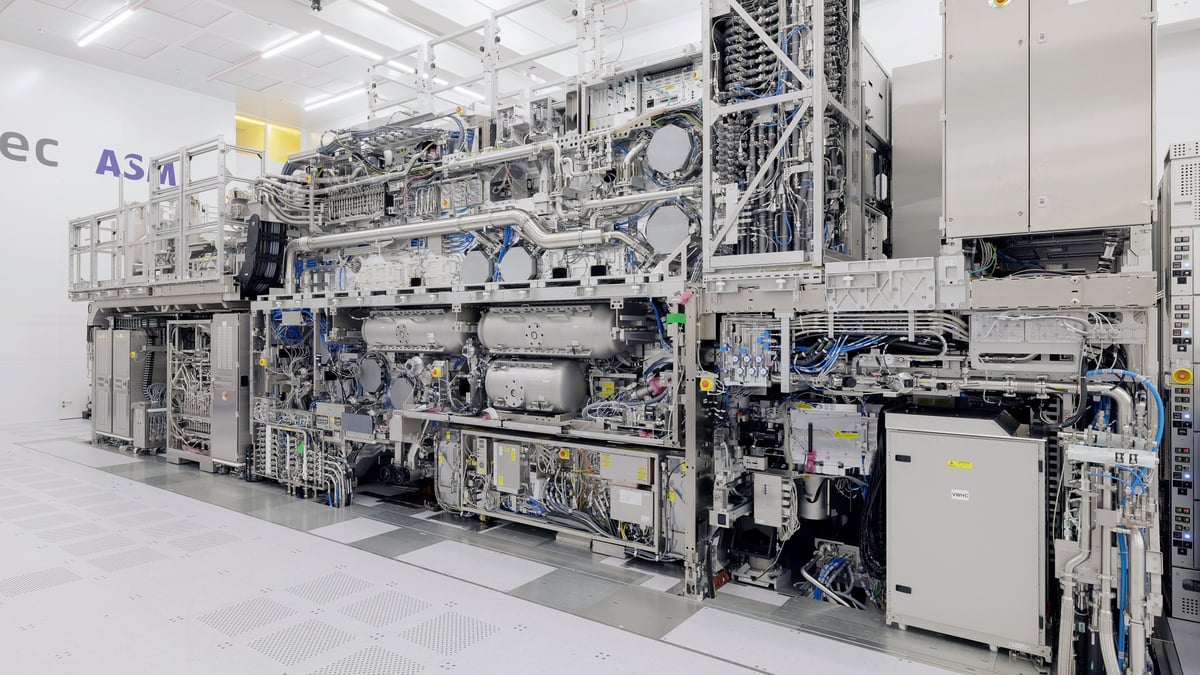
ASML has secured commitments from the world's leading chipmakers to adopt its latest High-NA EUV lithography systems. Samsung plans to integrate these machines, which cost up to $400 million per unit, into high-volume manufacturing by 2028, while TSMC will follow in 2030. They join Intel, which is already operating the hardware. This transition relies on upgrading photomasks from the six-inch standard to twelve inches. According to ASML technology chief Marco Pieters, who called the shift a "huge opportunity," the transition could boost machine throughput by 40 percent and simplify design. TSMC and ASML plan to establish a test line for these twelve-inch masks by 2031, targeting production use on High-NA tools by 2033.
For chip designers, the transition to twelve-inch photomasks resolves a major bottleneck. Previously, the six-inch limit forced manufacturers to stack chips vertically, increasing cost and complexity. The larger masks allow for a wider exposure area on a single silicon wafer, streamlining the production of high-performance AI accelerators and advanced memory chips. Samsung intends to use the technology for memory chips starting in 2028 to meet soaring demand from AI data centers. Securing TSMC is vital for ASML, as the Taiwanese foundry generates roughly 16 percent of the lithography giant's revenue.
Meanwhile, Huawei is spearheading China's efforts to build an independent semiconductor supply chain. Blocked by Western export controls from acquiring ASML's EUV systems, which use a 13.5-nanometer wavelength, China is focusing on older Deep Ultraviolet (DUV) technology operating at 193 nanometers. While DUV requires complex multi-patterning to achieve advanced structures, it remains the global workhorse. Shanghai-based equipment maker Yuliangsheng, a spin-off of SiCarrier, aims to manufacture twelve DUV machines by the end of the year. These machines are currently undergoing testing by SMIC and on Huawei's own production lines.
To bypass bottlenecks in projection lenses and light sources, Huawei's venture capital arm, Habo, is investing in domestic alternatives. While Yuliangsheng currently relies on lenses from Zeiss—which officially sells only to ASML but sees its products reach China via secondary markets—Habo is backing Zeiss rivals like Fujian Zhiqi Photonics and light-source developer Beijing RSLaser to establish domestic self-sufficiency.
This is our own summary of reporting by The Decoder