Helion Integration Boosts vLLM Inference Speed
Integrating Meta's Helion kernel language into the vLLM inference framework has boosted throughput by over 10 percent, demonstrating how automated kernel tuning can optimize LLM serving.
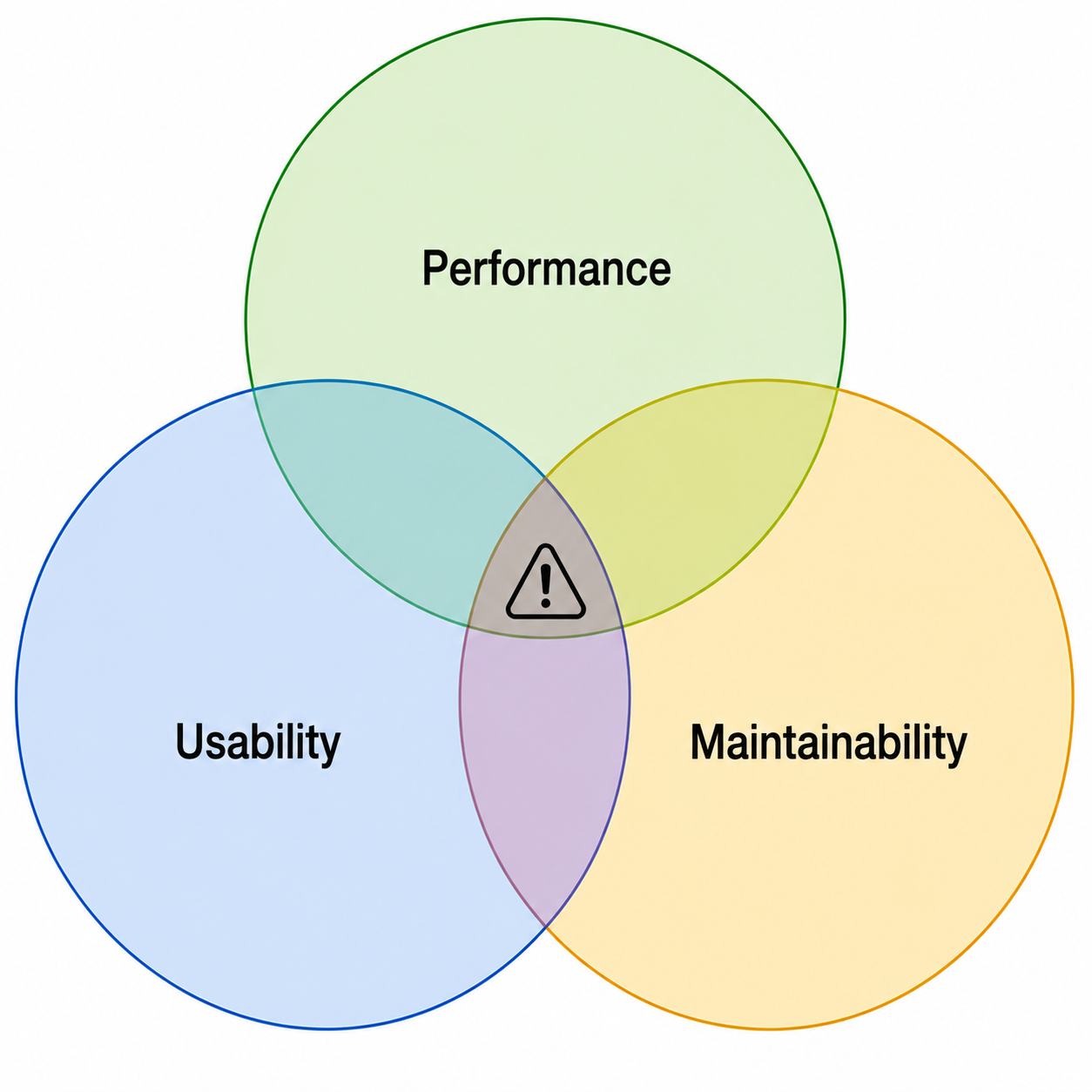
Engineers from Red Hat and Meta have integrated the Helion domain-specific language into the linear backend of the vLLM inference engine. Helion is a PyTorch-native, hardware-agnostic language designed for writing high-performance kernels. By replacing manually specialized kernels with a single unified general matrix multiplication implementation, the integration automates the selection of algorithmic variants like Standard GEMM, Split-K, and Swap-AB. This approach uses an ahead-of-time autotuner to systematically find the best configuration for specific tensor shapes.
Evaluated on an NVIDIA H100 80GB HBM3 GPU, the Helion backend outperformed default vLLM backends across several Qwen models, including Qwen3-1.7B, Qwen3-4B, Qwen3-8B, Qwen3-14B, Qwen3-32B, and Qwen3.8-27B. For individual quantized kernels, Helion achieved geometric mean speedups of 1.110x for FP8_Dynamic over CUTLASS, 1.178x for W8A8_INT8 over CUTLASS, 1.149x for Block_FP8 over FlashInfer, and 1.177x for Block_FP8 over DeepGEMM. These kernel-level improvements translated to end-to-end serving throughput gains of more than 10 percent for certain workloads when tested with the ShareGPT dataset at batch sizes up to 32.
To bypass runtime overhead, the system employs a hybrid dispatch strategy. For small input sizes up to a maximum token threshold of 32, the backend routes execution to Helion under CUDA Graph replay. Larger workloads automatically fall back to default CUTLASS or DeepGEMM kernels. The tuning process itself utilized the Claude Opus 4.8 model to seed the search space, which helped the autotuner quickly identify high-performing configurations.
For practitioners, this development offers a way to extract maximum performance from hardware like NVIDIA Hopper and Blackwell GPUs without requiring deep kernel-engineering expertise. While ahead-of-time tuning can take several hours, the authors suggest a model where the core integration is maintained upstream while users run automated tuning locally to generate optimized configurations for their specific deployments. The implementation is currently available in a public vLLM fork.
This is our own summary of reporting by PyTorch Blog