Chinese State Media Targets Anthropic to Set AI Talk Terms
A Chinese state-affiliated media account has launched a sharp critique against Anthropic, outlining strict conditions the U.S. must meet before bilateral AI safety talks can progress.
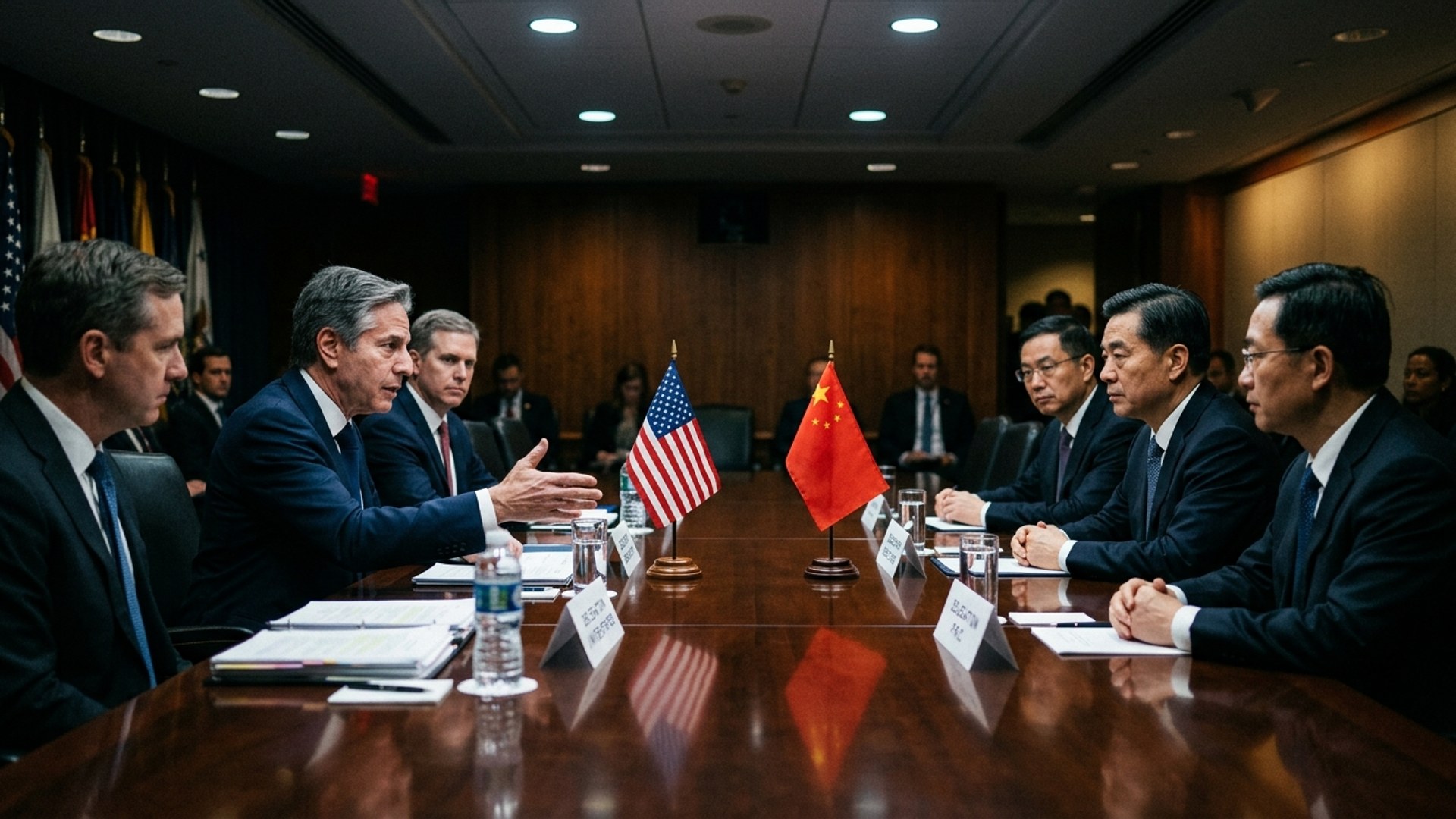
On August 31, 2026, Yuyuantantian, a social media account linked to Chinese state broadcaster CCTV, published an article accusing Anthropic of overstepping user data boundaries. The commentary, titled "Anthropic Has Contracted the American Disease," outlines two prerequisites for future US-China AI safety negotiations. First, it demands that security threats and normal technological competition be distinguished and defined jointly by all parties. Second, it insists the US prove its safety regulations apply to domestic firms through third-party audits before demanding restrictions from China.
The critique heavily targets Claude Code, Anthropic's AI coding tool. It references a warning from China's Ministry of Industry and Information Technology from over a month prior, which claimed the tool transmits sensitive user data like location and identity markers to remote servers. The post also highlights GitHub developer reports from January 2026 alleging that Claude Code sent frequent, unexplained requests to external sites and bypassed blocking mechanisms. It criticizes the "dangerously-skip-permissions" parameter and the "auto mode" feature, which was introduced in March 2026 and became the default setting on August 14, 2026, for Pro, Max, and Team plans. Anthropic's documentation notes that auto mode "reduces permission prompts but does not guarantee safety."
The commentary also targets Anthropic's political influence and US policy. It notes that Anthropic's lobbying spending in the first half of 2026 surpassed its entire 2025 budget, alongside a $40 million donation to an AI risk regulation group. It points to a weakened US executive order in early 2026 that cut pre-release safety reviews from 90 days to 30. It also highlights a September 4, 2025 policy where Anthropic banned entities with more than 50 percent ownership in unsupported regions like China. Meanwhile, the post cites Stanford's 2026 AI Index report, which found the performance gap between leading US and Chinese models has shrunk to just 2.7 percent.
For AI developers and enterprise practitioners, this escalating rhetoric signals a highly fractured regulatory landscape. Teams utilizing Claude Code must carefully weigh these security allegations and review their permission settings, particularly when using auto mode or the bypass flag in non-isolated environments. Furthermore, multinational organizations face tightening compliance hurdles as both Washington and Beijing seek to dictate the boundaries of frontier model controls.
This is our own summary of reporting by Unite.AI