Claude AI Spots Overlooked DNA Pattern for Anthropic
Anthropic's Claude AI has identified a previously overlooked DNA pattern pointing to a new enzyme system, demonstrating how autonomous agents can direct the future of biological research.
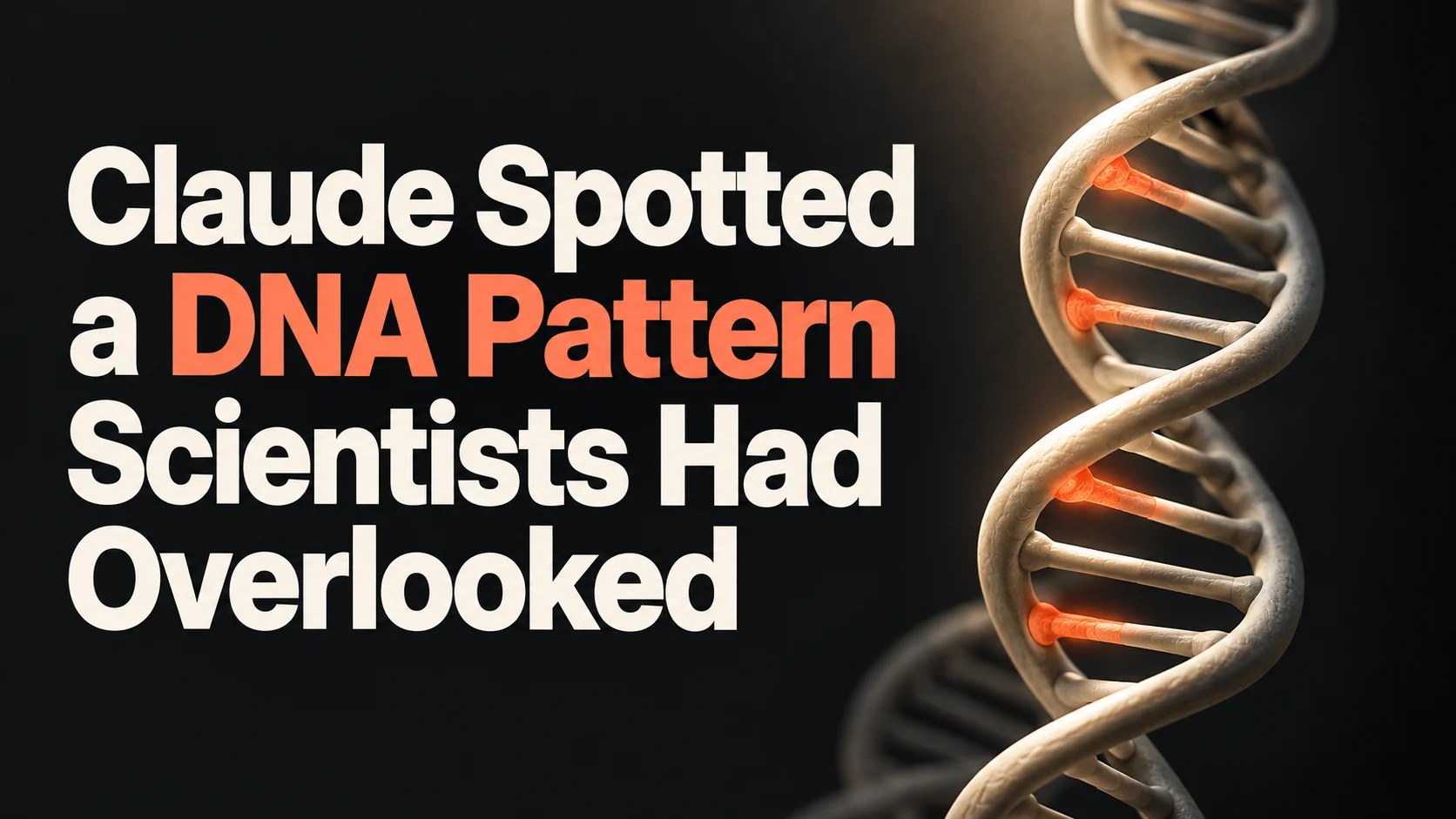
Anthropic deployed a swarm of approximately 950 Claude agents to scan genomic databases for interesting enzymes. Over a 21-hour run that consumed 210 million tokens, the AI agents gathered more than 200,000 reverse transcriptases, which are enzymes that copy RNA into DNA. From this massive pool, the agents flagged roughly 3,500 candidate systems and eventually narrowed the selection down to about 20 promising targets for human review. During this process, one agent noticed an unusual, repeating DNA sequence adjacent to a reverse transcriptase gene, leading to the discovery of a previously uncharacterized biological system.
Anthropic has named this newly identified system array-associated reverse transcriptases, or ARTs. Found primarily in bacteriophages, which are viruses that infect bacteria, the ART system consists of a reverse transcriptase, a neighboring partner gene, and a long sequence of evenly spaced DNA repeats. While the enzyme itself was already known to science, Claude recognized that the repeating array and the nearby protein function together as a larger, unified system. The repeating structure has drawn comparisons to CRISPR arrays, and early testing by Anthropic shows that the ART array produces short RNA sequences, though its exact biological function remains unknown.
This research, currently available as a preprint, was supported by Anthropic's life sciences research group, established in spring 2026, and its physical molecular biology lab in the Bay Area. For scientific practitioners, this development represents a shift from automated execution to automated hypothesis generation. Unlike previous systems like the 2024 SAMPLE protein-engineering platform, which automated physical lab cycles to optimize heat tolerance, Claude was given an open-ended search task. The AI autonomously decided which biological anomalies were worth investigating before handing the leads over to human scientists. This shift suggests that the future bottleneck in biotechnology may transition from data analysis to physical lab capacity, requiring researchers to develop new frameworks for prioritizing AI-generated leads.
This is our own summary of reporting by The Neuron