Anthropic and OpenAI Launch Cheaper Frontier Models
The sudden release of Anthropic's Claude Opus 5.5 and OpenAI's GPT-6 Sol and Luna models has triggered a massive price-to-performance war, dramatically lowering the cost of frontier AI.

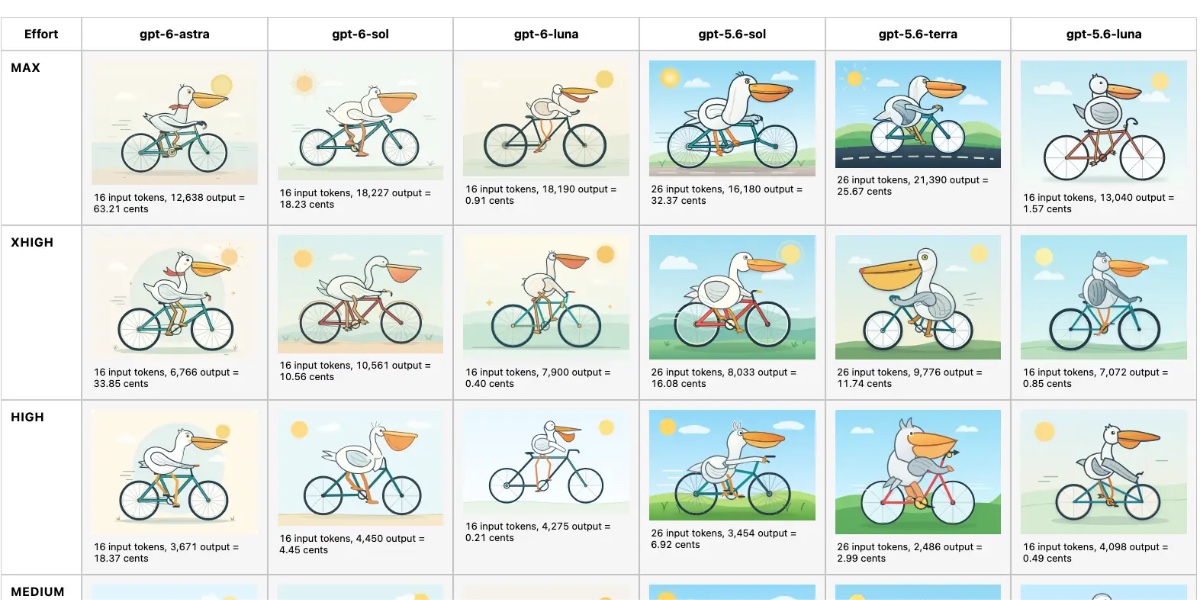
Anthropic released Claude Opus 5.5, matching Fable 5.1 but costing 40 percent less to run than Opus 5. It circumvents boundaries 85 percent less than Opus 5 or Claude Mythos 5.1, rerouting cyber requests to Opus 4.8 and biology queries to Opus 5. Frontier Design and METR tested the model, and Anthropic plans to launch Claude Sonnet 5.5 and Haiku 5.5 soon. OpenAI countered with GPT-6 Sol and GPT-6 Luna, cutting API prices 50 percent compared to GPT-5.6 promotional rates. On AutomationBench, GPT-6 Sol at highest reasoning effort beats Claude Opus 5 while costing 9 percent as much per task. On DeepSWE v1.1, Sol scores 68.8 percent versus Fable 5's 69.9 percent at 80 percent lower cost. Both models, now live in ChatGPT Work, Codex, and various API tiers, offer prompt caching with 90 percent discounts, while GPT-6 Astra remains their top model.
The price war extends to open weights. Xiaomi introduced MiMo-V2.6-Pro, which scored 46 on the Artificial Analysis Intelligence Index, tying xAI’s Grok 4.7 (xHigh) and beating GLM-5.3 (max). MiMo-V2.6-Pro features a 1-million-token context window and costs $0.435/$0.87 per million input/output tokens. Xiaomi also launched MiMo-V2.6-Flash ($0.14/$0.28) and MiMo-V2.6-Pro-UltraSpeed, which runs up to 20 times faster. Training MiMo-V2.6-Pro cost $2.62 million across 750,000 agent trajectories. Concurrently, xAI updated its lineup with Grok 4.7, which performs comparably on GDPval and AA Briefcase. Grok 4.7 scored 62.4 percent on LatchBio's biosafety benchmark and blocked 96.7 percent of risky prompts on HackerBench v0.3, keeping its API price at $2/$6 per million input/output tokens in Cursor, Grok Build, and the API, allowing Grok 4.6 users to upgrade freely.
In audio, Alibaba released Qwen-Audio-3.1-TTS, a speech synthesis model featuring a 12.5 Hz speech tokenizer and supporting 16 languages and 20 Chinese dialects. It allows three-minute synthesis, 48kHz output, and uses 86 inline tags for effects, topping the SEED-TTS-Eval and CV3-Eval benchmarks. However, security concerns also emerged as researcher Patrick Wardle disclosed a zero-day vulnerability in Meta's Muse macOS agent, which connects to WhatsApp, email, calendars, and social media, allowing local apps to hijack accounts, prompting Amazon to block it. For practitioners, these rapid releases mean a massive drop in operational costs, offering cheaper proprietary options and self-hostable open weights models without sacrificing performance.
This is our own summary of reporting by The Batch