Dyna Robotics Launches Dyna-2.1 for Long-Horizon Autonomy
Dyna Robotics has introduced Dyna-2.1, a semi-humanoid robot powered by a world-action model trained on over one million hours of video, achieving reliable long-horizon physical autonomy.
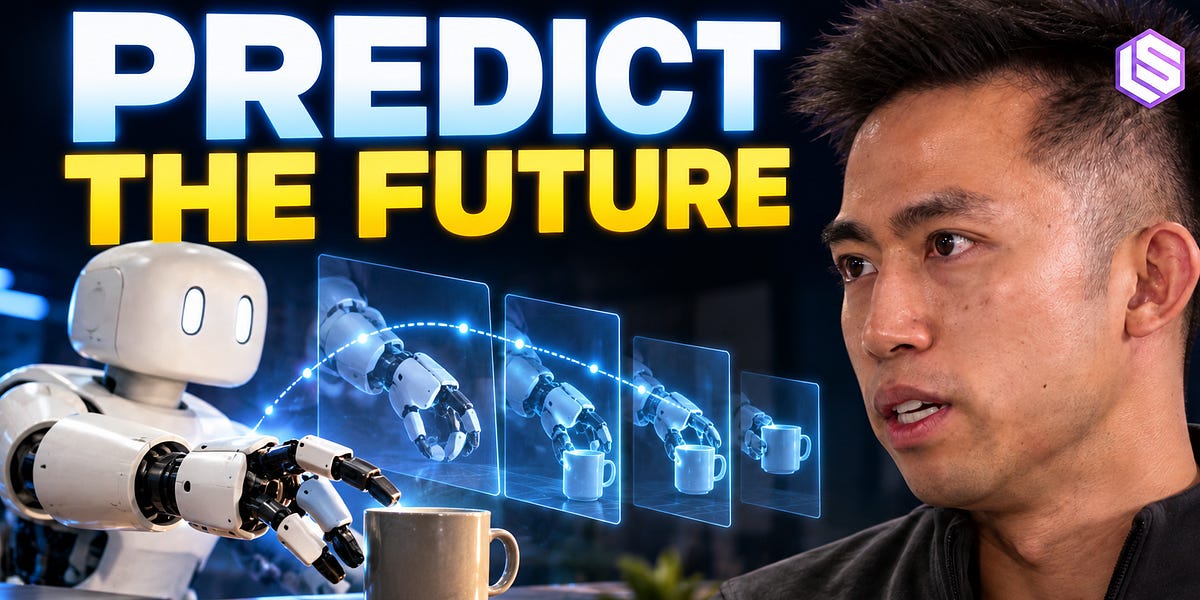
Dyna Robotics has unveiled Dyna-2.1, a physical agent built to manage extended multi-step physical workflows in real-world settings. Powered by the company's Dyna-2 foundation model, the wheeled semi-humanoid robot combines custom hardware with an agentic architecture designed for hour-long autonomous task execution. The underlying model was pre-trained on more than one million hours of human egocentric video, establishing new scaling laws across four orders of magnitude to map complex physical interactions.
Under the hood, Dyna-2 utilizes a diffusion transformer architecture paired with flow matching to predict future video frames alongside executable physical actions. Rather than relying solely on traditional vision-language-action paradigms, the system performs visual reasoning in the physics space before translating visual predictions into precise hardware controls. This architecture enables the agent to generalize to unseen environments and learn new tasks from as little as 45 minutes of human demonstrations.
In practical evaluations, Dyna Robotics demonstrated the platform's reliability by achieving a 99.4% success rate folding restaurant napkins continuously over a 24-hour period, successfully recovering even after pulling over an entire stack. The company is actively moving past laboratory demos into production deployments, putting its systems to work at restaurant chain Din Tai Fung and conducting commercial hospitality pilots with Best Western.
To address the lack of internet-scale robotics data, Chief Scientist Jason Ma noted that Dyna Robotics is combining egocentric human pre-training with synthetic training pipelines. Drawing on techniques from Ma's earlier research on the Eureka project, the team plans to generate synthetic environments using frontier AI models while employing Dyna-2 to generate its own synthetic video training data, creating a closed-loop flywheel for continuous model improvement.
This is our own summary of reporting by Latent Space