Fireworks AI Launches Training API for Custom ML Loops
Fireworks AI has launched its Training API and Fireworks Lab to help machine learning teams run custom training loops on open models with managed distributed compute.
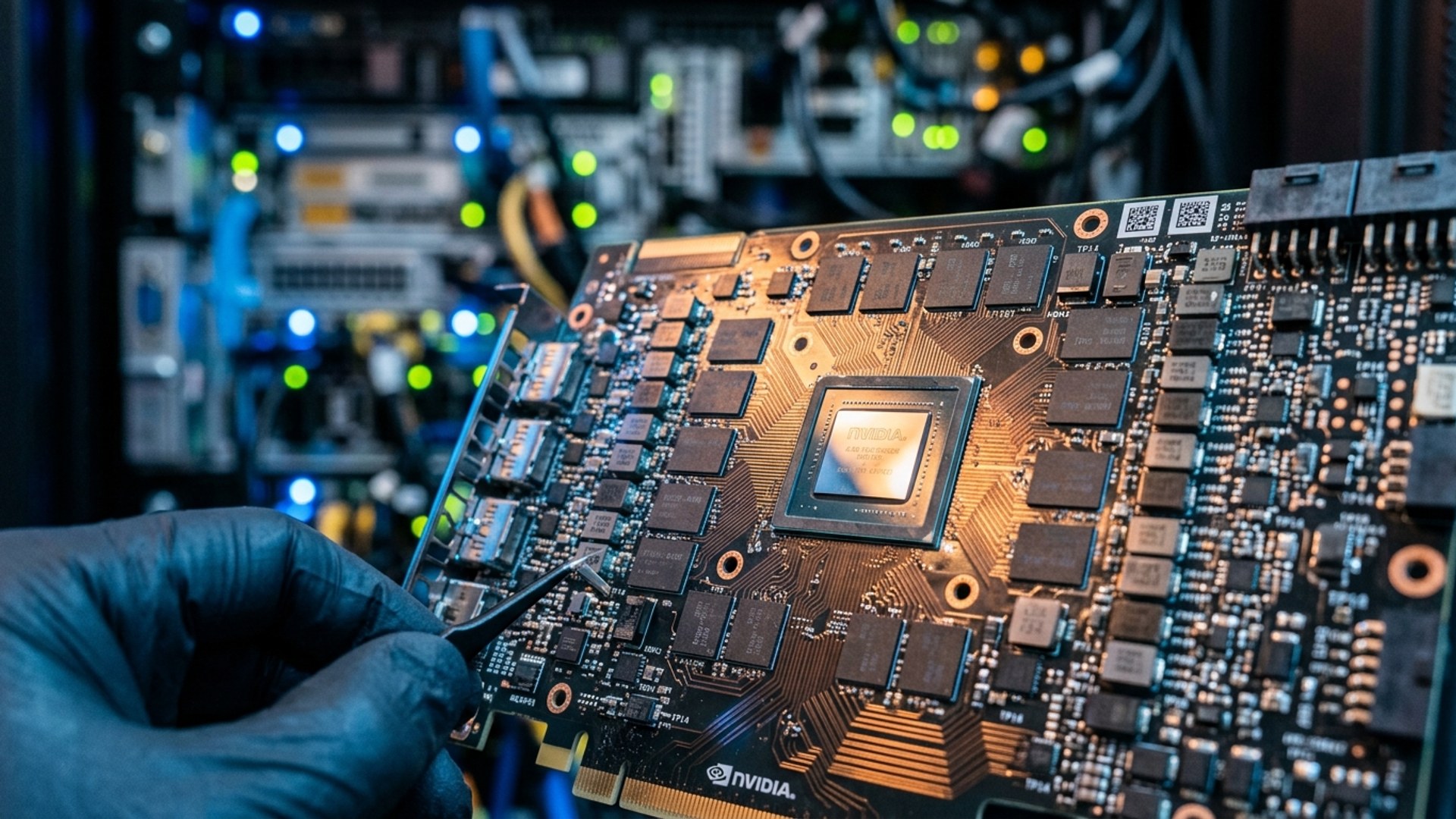
Fireworks AI has made its Training API and Fireworks Lab generally available, allowing machine learning teams to run custom training loops on open models. The API links a developer's Python training loop to Fireworks-managed distributed compute, handling both the gradient-calculating trainer and the rollout deployment. While developers maintain control over their data, environments, and loss or reward functions, Fireworks manages weight synchronization, failed-swap recovery, and train-rollout alignment.
The platform offers two compute tiers. A serverless option bills per token to train LoRA adapters on shared infrastructure, while a dedicated tier bills per GPU hour for full-parameter training, larger context lengths, and massive mixture-of-experts models. To optimize reinforcement learning, Fireworks aligns numeric formats like BF16, block-wise FP8, and NVFP4 across both paths, using Router Replay to preserve routing decisions. It also runs asynchronous reinforcement learning, overlapping rollout collection with training, and uses XOR diffs with zstd compression to reduce transmission bandwidth by up to 10 times.
Several companies have already utilized the infrastructure. Harvey post-trained Kimi K3 using asynchronous reinforcement learning; its resulting Harvey Tenet model achieved a 19.7% all-pass score on LAB compared to 11.5% for Claude Fable 5, at roughly one-third of the cost per task. Vercel applied reinforcement fine-tuning and speculative decoding to its v0 auto-fixer, reaching a 93% error-free generation rate and a 40-fold improvement in end-to-end latency. Heidi Health deployed a clinical scribe with 3.5 times lower latency in four weeks. Additionally, Factory fine-tuned two small LoRA adapters on a Qwen base, catching 70% of real secrets compared to 59% for GPT-5.5, within a 5% false-alarm budget.
For practitioners, this release unifies fragmented training and rollout infrastructure, enabling a continuous loop of training, deployment, evaluation, and retraining. Fireworks claims this setup allows teams to achieve two to four times more iterations on the same budget. The Training API is accessible now through self-serve signup, supporting supervised fine-tuning, direct preference optimization, odds-ratio preference optimization, reinforcement learning, and distillation.
This is our own summary of reporting by Unite.AI