Google DeepMind WeatherNext Adds Day to Cyclone Forecasts
Google DeepMind has open-sourced its WeatherNext Cyclones model, which predicts storm tracks and intensity a full day faster than previous systems to help save lives.
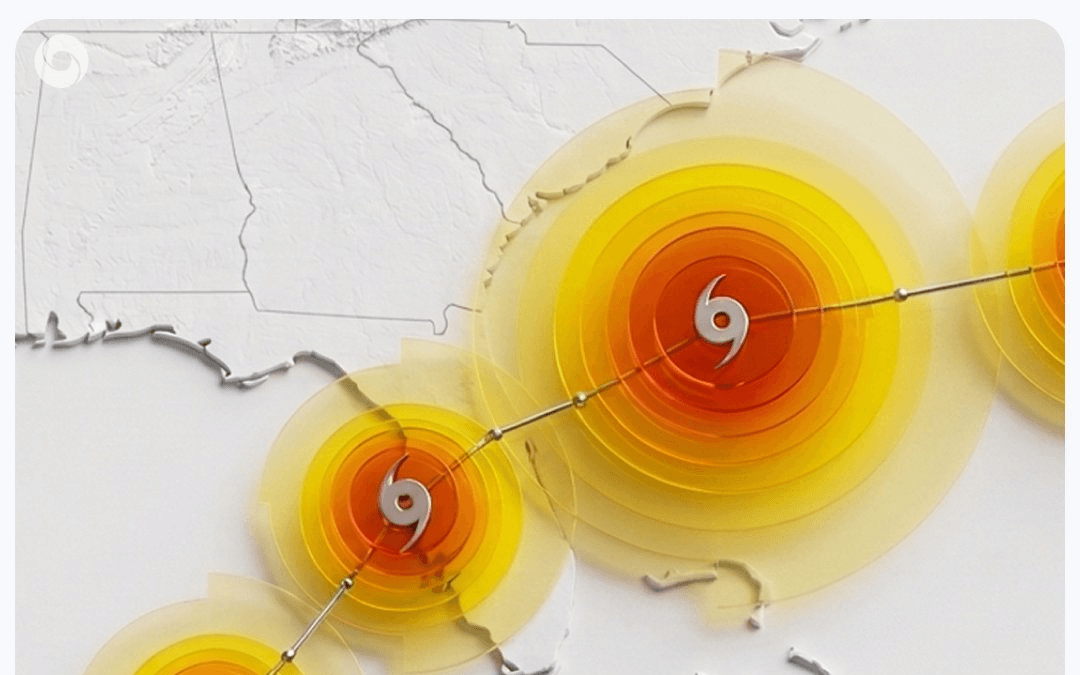
Google DeepMind has published research in Nature detailing its new WeatherNext Cyclones model and has open-sourced the code and weights for it, alongside WeatherNext 2 and WeatherNext 2-mini, on GitHub. The model achieves state-of-the-art accuracy across cyclone tracking, intensity, and wind structure. This breakthrough effectively compresses a decade of meteorological progress into a single system, providing forecasters with an extra 24 hours of lead time. Under the new paradigm, three-day forecasts match the accuracy of prior models' two-day forecasts.
The model challenges long-held meteorological assumptions by achieving its top intensity accuracy at a 28km resolution, which is 100 times coarser than traditional forecasting models. Historically, meteorologists had to choose between global models that excel at tracking and high-resolution local models that capture rapid intensity changes. WeatherNext bridges this gap in a single end-to-end model. In practice, the FGN ensemble mean track position error is significantly lower than GenCast, offering roughly a 24-hour accuracy advantage at lead times of 3 to 5.5 days.
During Hurricane Melissa, the model demonstrated its real-world utility by predicting a Category 5 landfall in Jamaica five days in advance. This marked the National Hurricane Center's first-ever forecast of a storm intensifying from Category 1 to Category 5 before making landfall. To scale these predictions, forecasters can now generate 1,000 probabilistic scenarios per storm via WeatherLab, with each 15-day forecast scenario running in under a minute on a Tensor Processing Unit.
This rapid, highly accurate forecasting is critical for mitigating the devastating impacts of tropical cyclones, which have killed more than 700,000 people and caused 1.4 trillion dollars in economic losses over the last 50 years. By delivering faster, more reliable data on storm intensity and wind structure, the open-source model provides emergency managers with the vital hours needed to coordinate evacuations and save lives.
This is our own summary of reporting by AlphaSignal