Anthropic Launches Dynamic Workflows for Claude Agents
Anthropic introduced dynamic workflows for Claude Managed Agents, allowing its lead AI model to automatically design, program, and coordinate multi-agent architectures for complex developer tasks.
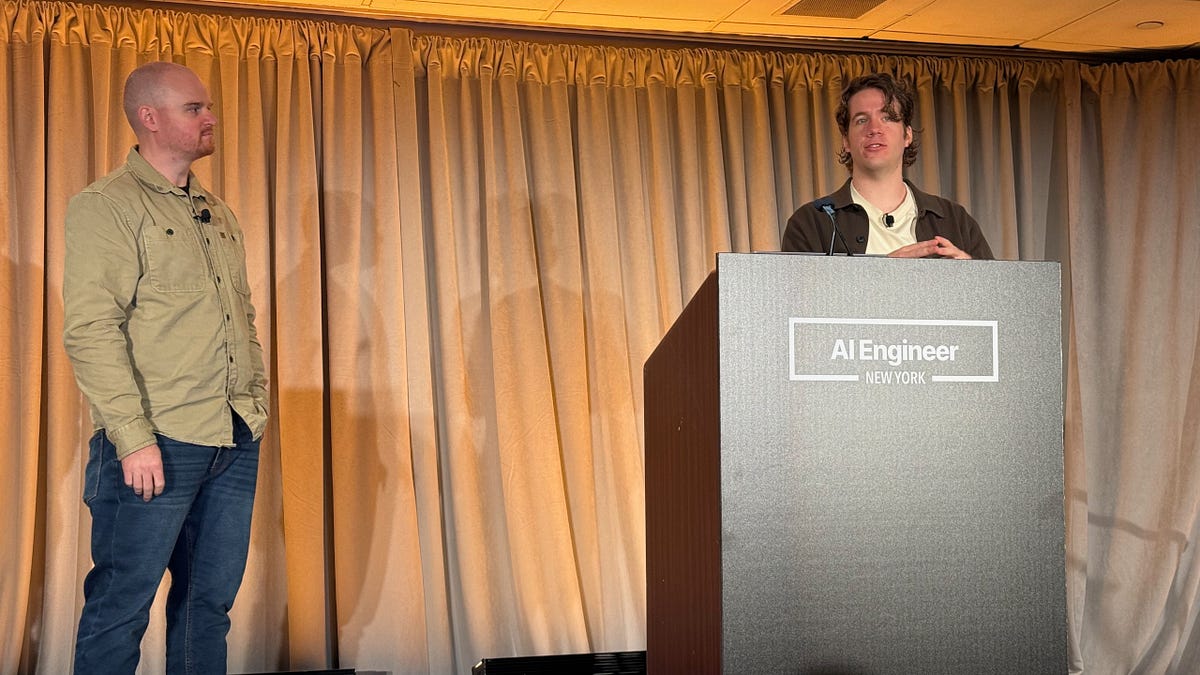
At the AI Engineer New York 2026 conference, Anthropic technical staff members CJ Avilla and Harrison Stall detailed dynamic workflows, a feature recently added to Claude Managed Agents within the Claude Console. Building on concepts like the "harness for every task" previously seen in Claude Code, dynamic workflows—often called "flows"—allow Claude to autonomously determine its own multi-agent topology. Rather than requiring developers to manually configure coordinators and fixed sub-agent rosters, a lead agent generates an execution plan and writes an orchestration program to deploy sub-agents, aggregate results, and handle data flow across discrete, verifiable units of work.
The feature draws inspiration from historical operating system developments like Ken Thompson's Unix and Linus Torvalds' Linux, aiming to handle complex engineering workloads without turning human developers into approval bottlenecks. Dynamic workflows operate via the Claude Console API, allowing users to pass optional pre-configured specialist sub-agents while letting the system automate interconnections. To demonstrate the capability, Anthropic presented a stock watchlist scanner that distributed individual ticker scans to agents in isolated contexts during an initial phase, followed by a consolidated review phase that compiled a final report.
For software practitioners, dynamic workflows trade higher token consumption for significantly deeper task execution by allocating test-time compute to difficult problems. Developers can manage costs and prevent runaway parallelization by setting session budgets and using lower default agent limits. Sub-agents communicate through a shared filesystem rather than direct inter-agent API messaging. To optimize performance and reduce expenses over time, developers can inspect execution graphs inside the Claude Console or leverage a research preview feature called dreaming, which reorganizes existing memory stores by merging duplicates and removing stale entries. Stall noted the ultimate goal is making complex problem-solving, such as OpenAI's recent work on the Navier-Stokes Millennium Prize problem, broadly accessible to general developers.
This is our own summary of reporting by Latent Space