OpenCode Desktop App Runs Free Meta Muse Spark Model
The OpenCode desktop app lets developers run agentic coding workflows using rotating free models like Meta's Muse Spark 1.3, offering a flexible alternative to locked-in AI platforms.
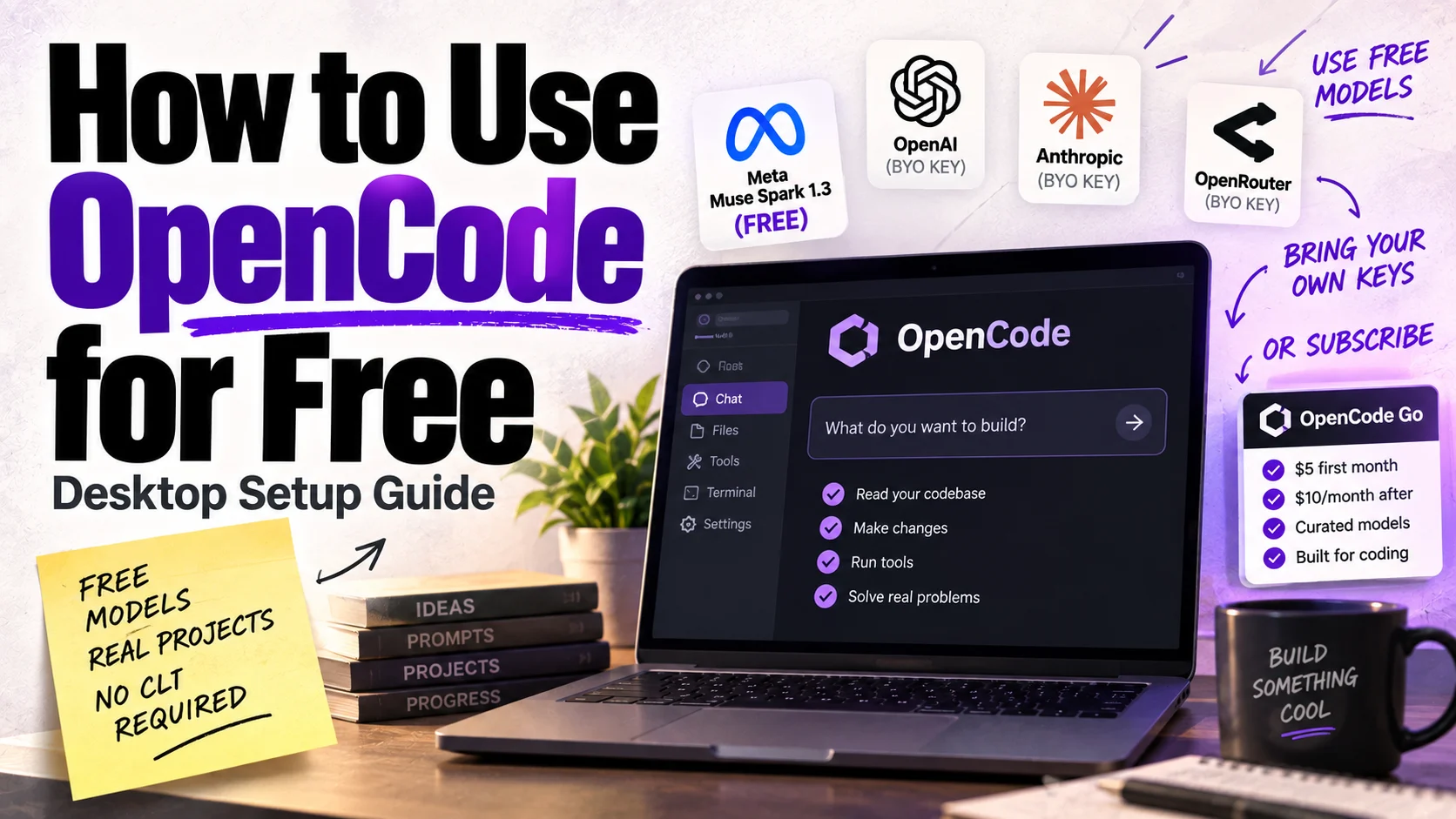
OpenCode has emerged as a highly flexible, open-source AI coding agent available as a desktop application for macOS, Windows, and Linux, as well as a terminal interface or IDE extension. Unlike single-model platforms, OpenCode functions as an independent interface that supports more than 75 LLM providers, including OpenAI, Anthropic, and OpenRouter. This architecture allows software developers to select their preferred AI engine for local or cloud-based tasks, working directly inside local project folders to inspect files, understand code structures, and execute automated changes.
As of September 21, 2026, the platform features rotating free options through its OpenCode Zen service, such as Meta's Muse Spark 1.3 Contributor Free. Meta designed this specific model for extended agentic and coding tasks, improving its ability to maintain context over long workflows while reducing unnecessary turns and tool calls. However, utilizing this free tier requires a trade-off, as the contributor endpoint grants Meta permission to use prompts and completions for training future models. Practitioners are advised to avoid inputting sensitive, proprietary, or confidential data when using these subsidized endpoints.
For developers seeking alternative access methods, OpenCode offers multiple tier structures. Users can opt for OpenCode Go, a subscription service priced at $5 for the first month and $10 per month thereafter, which provides predictable access to a curated selection of coding models. Alternatively, the pay-as-you-go OpenCode Zen tier allows users to add credit and pay strictly for the tokens they consume. Developers can also connect their own external API keys or run private models locally on their own hardware.
This multi-provider approach changes the workflow for software practitioners by removing the financial barrier to experimentation. Instead of manually copying and pasting code snippets back and forth between a browser-based chatbot and an editor, developers can let the agent execute small, iterative tasks directly in their workspace. By starting with simple prompts to inspect projects before making modifications, users can safely integrate agentic workflows without worrying about immediate API costs.
This is our own summary of reporting by The Neuron