Leaked Anthropic Draft Bill Preempts State AI Laws
A newly leaked draft bill pitched by Anthropic would block state-level AI safety laws while setting high hurdles for federal intervention, sparking sharp pushback from AI safety advocates.
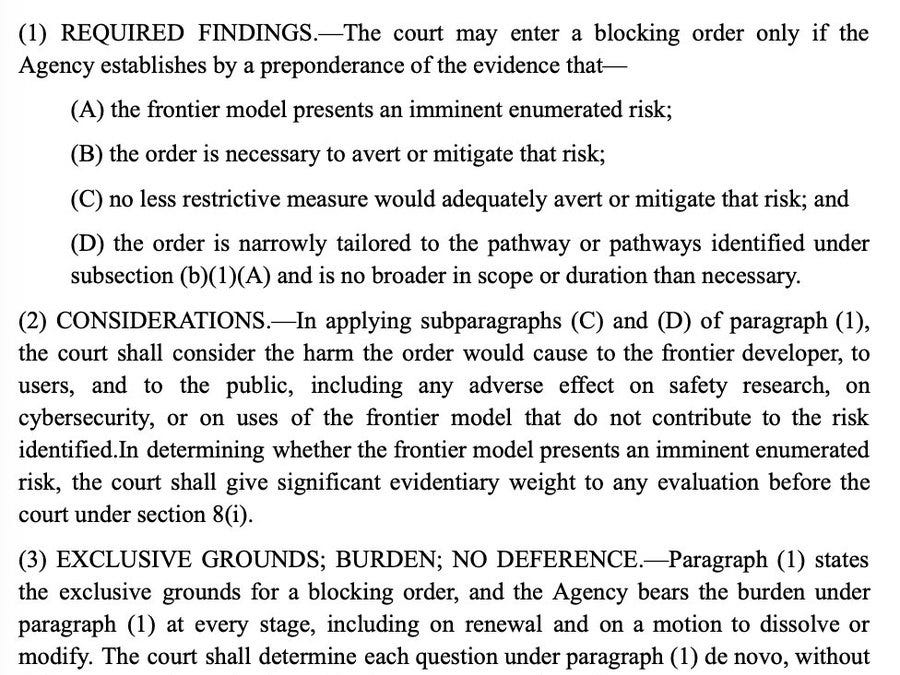
A leaked federal legislative draft quietly circulated by Anthropic is drawing intense scrutiny from safety researchers and policy experts. The proposal introduces federal preemption over state-level safety rules—effectively overriding legislation like SB 53 and the RAISE Act—while imposing weaker enforcement mechanisms than earlier proposals like the FRONTIER Act introduced in July. Critics argue the document reflects a shift toward safeguarding corporate interests and shielding labs from administrative overreach rather than establishing rigorous safety guardrails.
Under the leaked draft, state courts and local regulators would lose the authority to halt the deployment, development, or internal testing of frontier models. Instead, federal authorities could only restrict a model if it poses an imminent catastrophic threat, explicitly defined as a hazard capable of killing more than 50 people or causing over $1 billion in financial damage. Furthermore, agency officials would face an exceptionally strict legal burden to prove that no less restrictive alternative exists, while judges are directed to weigh financial and operational harms to model developers when reviewing restrictions.
Despite these limits, the proposal does incorporate specific safety elements absent in prior proposals. It mandates continuous third-party evaluations, covers risks tied to automated AI research and development, and strengthens whistleblower protections alongside corporate security standards. However, policy experts point out that the draft lacks mandatory government licensing for auditors, leaving third-party assessors to be chosen and paid directly by the AI developers they evaluate. It also relaxes incident reporting timelines, resisting requirements to disclose non-emergency safety incidents within 72 hours.
For practitioners and safety specialists, the proposed framework signals a major recalibration of how regulatory risk is managed across the industry. By setting a low federal ceiling and curbing state intervention powers, the draft could prevent states from passing more stringent rules as capabilities grow. Commentators note that while technical staff inside labs debate extreme containment scenarios, corporate policy teams appear focused on mitigating executive branch intervention and preventing fragmented state regulations.
This is our own summary of reporting by Don't Worry About the Vase