OpenClaw 2.0 Launches for Self-Hosted Personal AI Agents
The release of OpenClaw 2.0 provides developers with an open-source framework to build and run fully self-hosted personal AI agents across local devices and cloud environments.
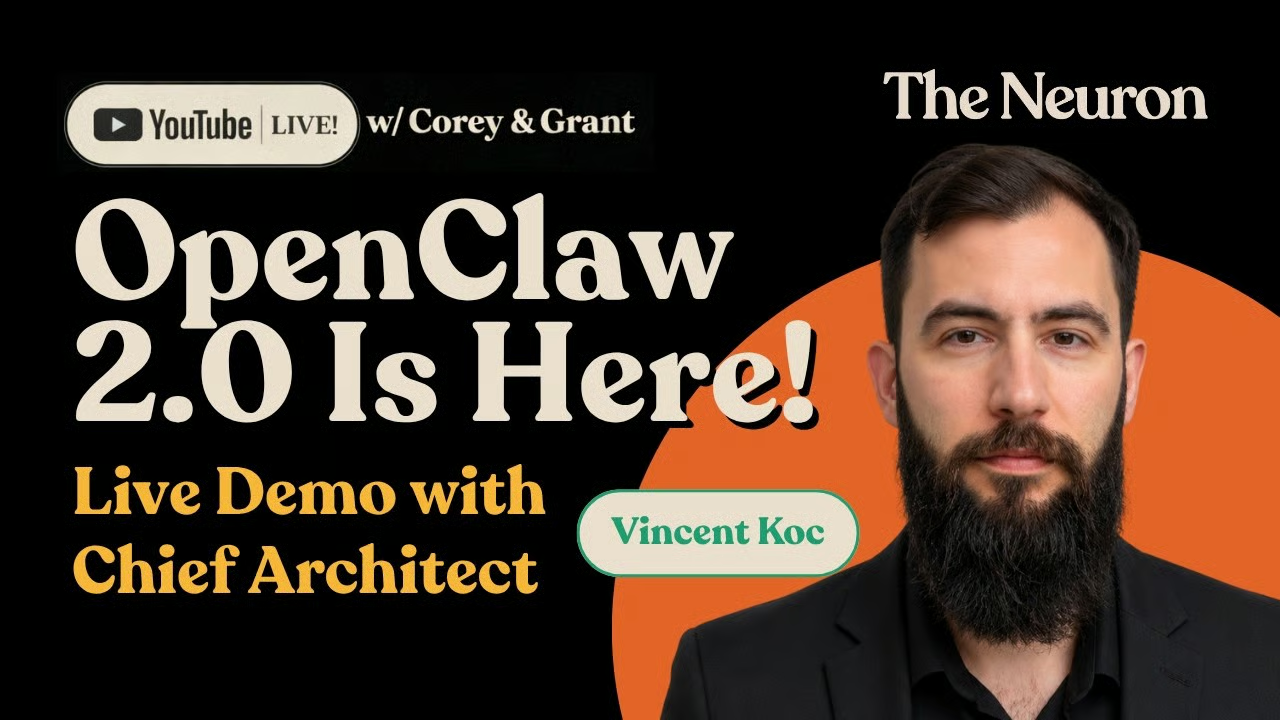
The open-source AI community has launched OpenClaw 2.0, a major update to the personal agent framework designed to let users build and run autonomous assistants on their own hardware. Led by Chief Architect Vincent Koc, the project offers a decentralized alternative to the proprietary agent ecosystems currently being developed by major tech firms, such as Meta Muse, Grok Bot, and Gemini Spark.
The 2.0 release focuses on simplifying the deployment process, offering an easier setup and a completely redesigned user experience. The framework allows personal agents to operate flexibly across a user's local machines and cloud workers. It integrates local models, interactive widgets, and customizable dashboards, making it easier for developers to monitor and interact with their running agents in real time.
In terms of control and execution, OpenClaw 2.0 handles complex workflows by managing memory, automations, loops, and strict approval controls. Security is maintained through localized credential and permission management, ensuring sensitive data remains under the user's direct control. Additionally, the update introduces experimental multi-agent features, including support for collaborative frameworks like Swarm.
For AI practitioners, this release represents a shift toward true agent ownership. Instead of relying on closed cloud APIs that pose privacy risks, developers can now deploy autonomous agents that execute tasks continuously, even after the active chat session is closed. By combining local execution with cloud scalability, OpenClaw 2.0 provides a practical, customizable blueprint for building secure, self-hosted AI workflows.
This is our own summary of reporting by The Neuron