Microsoft Launches Surface Laptop Ultra and Local AI Tools
Microsoft has opened pre-orders for the Surface Laptop Ultra and launched local AI tools to let Windows PCs run complex agentic tasks autonomously even when users are asleep.
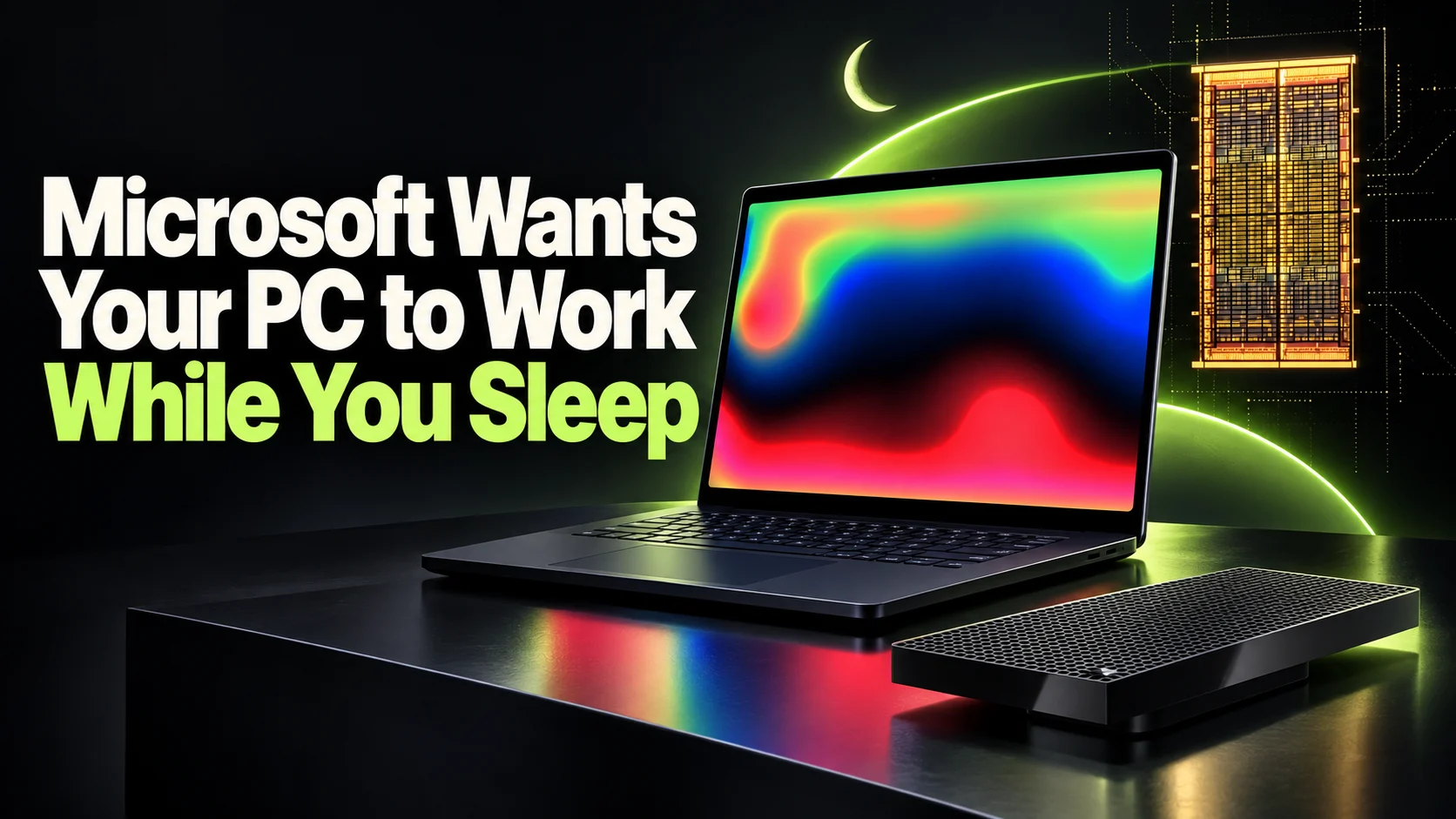
Microsoft has opened pre-orders for its new Surface Laptop Ultra and other Nvidia RTX Spark laptops, anchoring a broader push into what it calls hybrid intelligence. This strategy aims to split AI workloads between on-device hardware and the cloud to optimize performance and reduce costs. To support this, Microsoft is expanding GitHub's HydraFusion routing technology to local Windows devices in an experimental preview later this October, allowing systems to automatically decide whether a subtask requires a cloud model or can run locally.
To power these local tasks, Microsoft is bringing massive models directly to Windows PCs. This includes MAI Code 1.1 Flash running at 3-bit precision, which features 137 billion total parameters and 6.8 billion active parameters alongside a 256K context window. This optimization reportedly shrinks the model size by nearly 80 percent without sacrificing coding quality. Additionally, the 280-billion-parameter DeepSeek v4 Flash model is coming to local execution on RTX Spark devices, while Windows ML is adding support for llama.cpp to ease open-source model deployment.
To ensure these autonomous background agents do not compromise security or disrupt active users, Microsoft has made Microsoft Execution Containers, or MXC, generally available on Windows 11 and Windows 365. MXC provides isolated sandboxes, such as process, session, WSL, and MicroVM containers, to restrict what files and networks an agent can access. Notably, the session container gives an agent its own separate desktop, clipboard, and input environment. This prevents the agent from hijacking the user's active screen and mouse, allowing people to continue working uninterrupted while background processes run.
This architecture addresses the rising financial and computational costs of relying solely on cloud-based artificial intelligence. Logan Iyer, lead of Microsoft's Windows platform team, explained that the goal is to "save your frontier tokens for frontier problems." Meanwhile, Vivek Pradeep of Microsoft's applied sciences organization noted that the shift redefines the computer's role, raising the question of "what does a computer do when you sleep?"
This is our own summary of reporting by The Neuron