Redwood Researcher Predicts Automated AI R&D by 2030
In a recent podcast debate, Redwood Research's Ryan Greenblatt projected that artificial intelligence will fully automate its own research and development by 2030, accelerating timelines toward superintelligence.
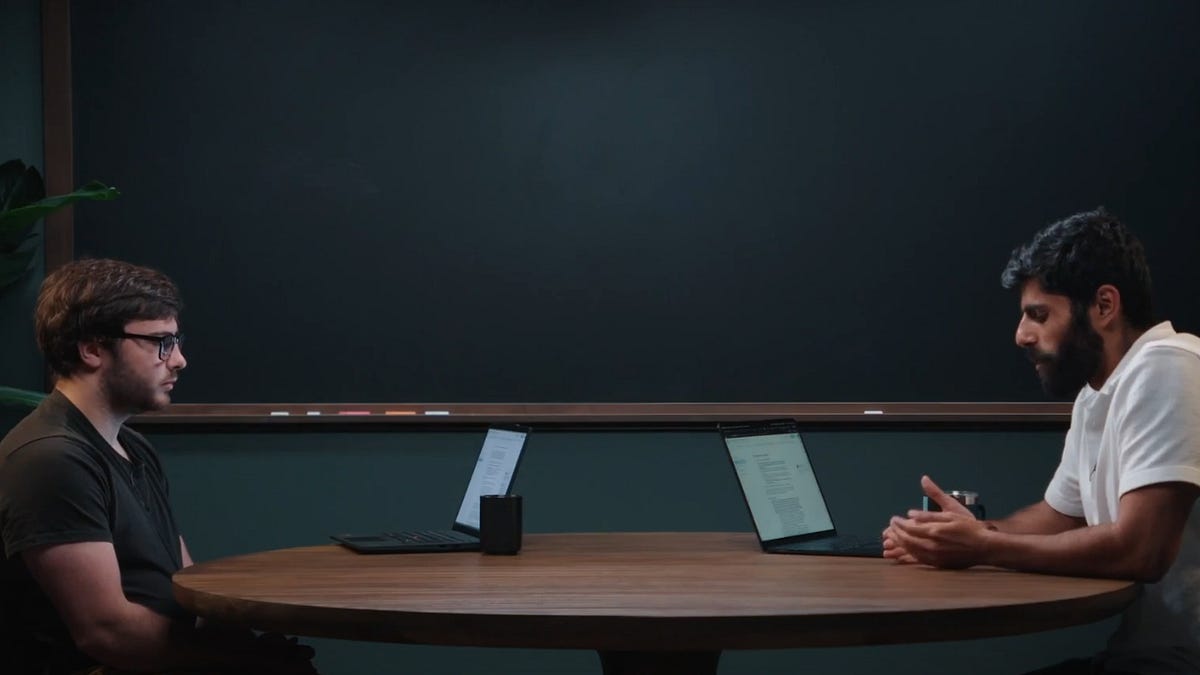
During an episode of Dwarkesh Patel's podcast, researcher Ryan Greenblatt of Redwood Research laid out a timeline for recursive self-improvement, predicting that AI will fully automate AI research and development between 2030 and 2031. Greenblatt estimated a median timeline of 2033 for AI to outperform humans across all jobs. This transition relies on AI models training themselves through reinforcement learning environments rather than being bottlenecked by scarce human expert data.
To illustrate the power of automated R&D, Greenblatt argued that if 2022-era hardware had been paired with fully automated AI assistance, developers could have achieved the capabilities of the advanced Mythos model within a single year. This acceleration is supported by rapid algorithmic efficiency gains, which increased threefold in 2022, three to ten times in 2023, and are projected to grow over tenfold in both 2024 and 2025. These compounding software improvements help bypass hardware constraints, even as hardware compute capacity itself scales by roughly 3.3 times annually.
The discussion also highlighted shifting industry economics, noting that Google is reportedly in talks to acquire AI firm Mechanize for 1.5 billion dollars. While some view this as a hunt for proprietary data, Greenblatt and Patel agreed that lab budgets remain overwhelmingly dominated by compute costs rather than data acquisition. Furthermore, token prices have remained largely flat since 2023, partly because larger training runs frequently fail to deliver expected gains due to subtle coding bugs—a challenge that automated AI systems are uniquely suited to debug.
For AI practitioners, these projections suggest a rapid shift from manual model tuning to designing automated reinforcement learning pipelines. Rather than relying on expensive human-curated datasets, future development will likely focus on creating robust evaluation environments where models like Claude or Mythos can safely self-improve. As automated R&D takes over, the primary role of human engineers will transition from writing code to establishing safety guardrails and defining high-level alignment criteria.
This is our own summary of reporting by Don't Worry About the Vase