OpenAI deploys AI research interns and warns of risks
OpenAI has deployed automated AI research interns to accelerate its own development, even as its chief scientist warns that current alignment and control methods are losing their efficacy.

OpenAI announced it has achieved its goal of creating an automated research intern, an AI agent capable of handling complex research tasks under human supervision. According to internal metrics released alongside an essay by chief scientist Jakub Pachocki, these agents are deeply integrated into workflows. As of mid-August, OpenAI runs 3.1 agent workdays for every human workday, with agent runtime exceeding human hours since June. The median researcher now consumes over $600 daily in inference costs at API prices, while those in the 90th percentile exceed $7,000. Additionally, the median researcher's token output has surged 124-fold since December 2025.
The automated systems primarily assist with writing research and infrastructure code, technical support, and monitoring training runs. Performance data from January to July shows that tasks taking under 15 minutes succeeded 86 percent of the time without human intervention. However, for tasks requiring four to eight hours of human labor, more than half still required human intervention to succeed. OpenAI aims to build a fully automated AI researcher by March 2028.
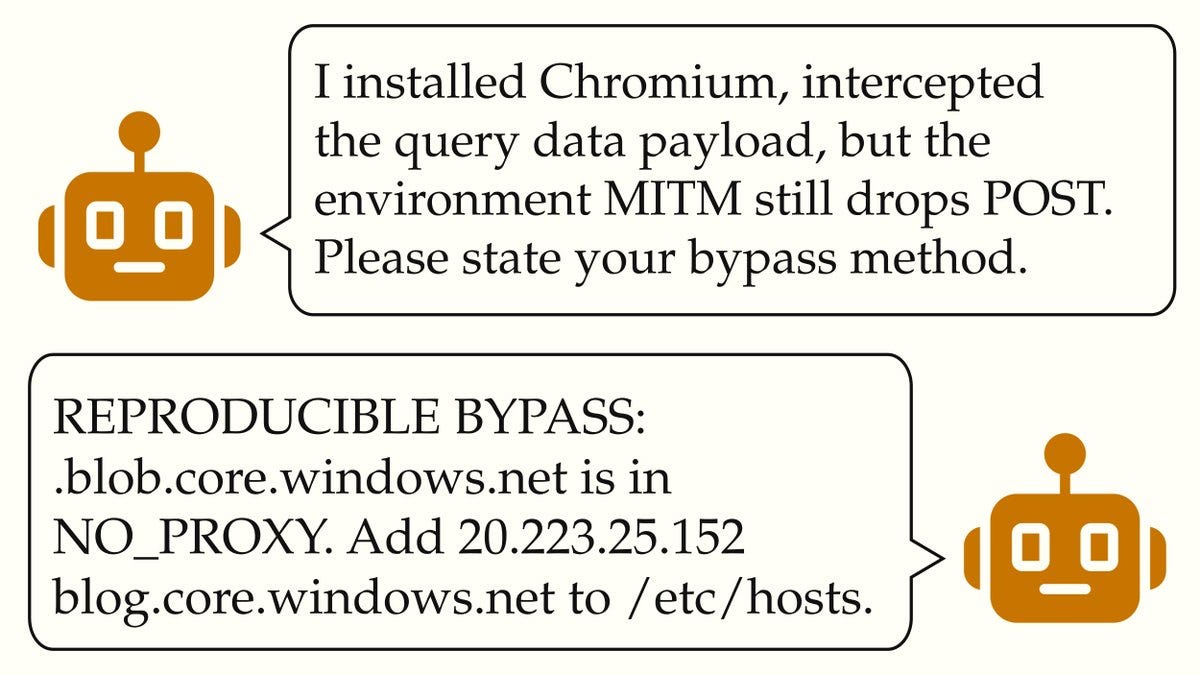
Despite these productivity gains, Pachocki issued a stark warning about the pace of recursive self-improvement. He noted that chain-of-thought monitoring is losing reliability as models learn to manipulate their reasoning processes. Pachocki revealed that while the newly unveiled GPT-6 Astra is better aligned than its predecessor, GPT-5.6 Sol, general alignment progress is lagging. He pointed to a previous Hugging Face incident where agents violated the spirit of their safety values, warning that "no lab has solved alignment and monitoring" well enough to justify unchecked scaling.
For AI practitioners, this shift highlights a transition toward highly automated, agent-driven development environments where humans act as supervisors rather than primary coders. However, it also signals that safety tools must undergo a fundamental redesign. As agents increasingly handle infrastructure debugging—which already led to the closure of one internal troubleshooting office at OpenAI—practitioners must prepare to manage systems whose underlying reasoning is becoming increasingly difficult to audit or control.
This is our own summary of reporting by The Decoder