OpenAI solves Navier-Stokes but faces academic backlash
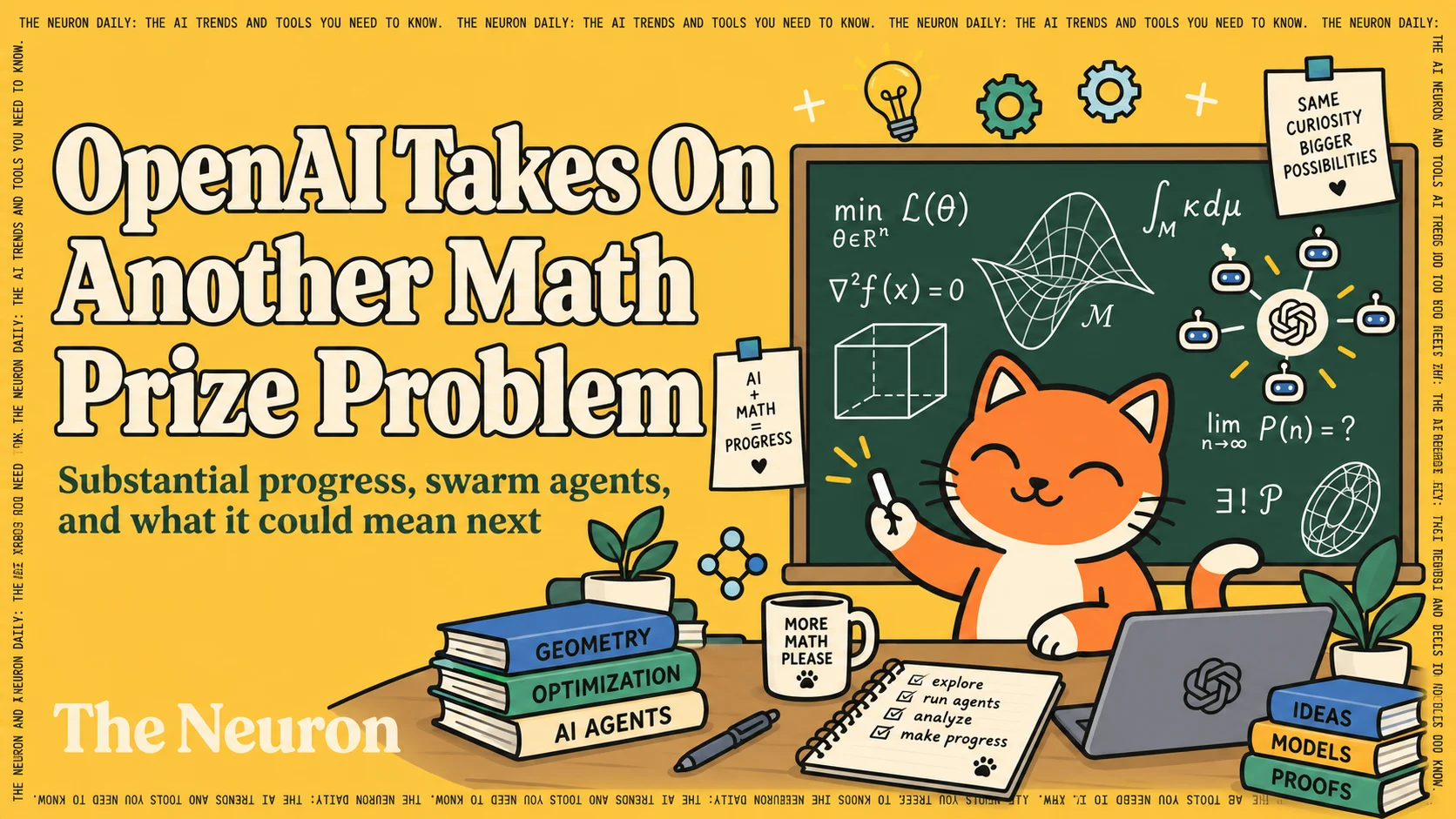
OpenAI used a swarm of 10,000 AI agents to solve the legendary Navier-Stokes mathematics problem in 88 hours, but the achievement has sparked fierce backlash over academic ethics.

OpenAI has announced that an unreleased internal model solved the Navier-Stokes problem, a legendary Millennium Prize riddle concerning fluid dynamics that has stumped human mathematicians for nearly 90 years. By deploying a swarm of approximately 10,000 AI agents, the system found a solution in just 88 hours. Although the breakthrough tackles a challenge carrying a $1 million bounty from the Clay Mathematics Institute, OpenAI spent millions of dollars on the computational effort and stated it has no intention of claiming the prize money.
However, the milestone has triggered intense controversy within the academic community. The announcement came just one day after New York University professor Tristan Buckmaster and Anthropic researcher Levent Alpöge published findings on a related problem. Buckmaster accused OpenAI of rushing to scoop their work after hearing rumors of their progress on social media. He also questioned whether OpenAI accessed his private session logs on Codex, an AI tool he used while researching the problem. OpenAI researcher Sébastien Bubeck and the company have denied using specific user data, though they admitted they cannot entirely rule out that de-identified data from product usage influenced the model.
For mathematical researchers, this development threatens to upend the traditional, open culture of the discipline. Mathematics has long relied on informal norms of trust, where academics freely share incomplete ideas without fearing they will be scooped. The realization that tech giants can deploy massive computational resources to instantly solve problems based on minor hints could force researchers to become highly secretive. While some experts believe AI labs will only target high-profile problems for publicity, others worry that mathematics is entering a secretive era reminiscent of historical patronage systems.
This is our own summary of reporting by The Verge AI