Oracle Integrates Quantinuum Helios Into AI Data Centers
Oracle will deploy Quantinuum’s 98-qubit Helios quantum computer inside its cloud data centers, allowing developers to run hybrid quantum-AI workloads alongside classical GPUs.
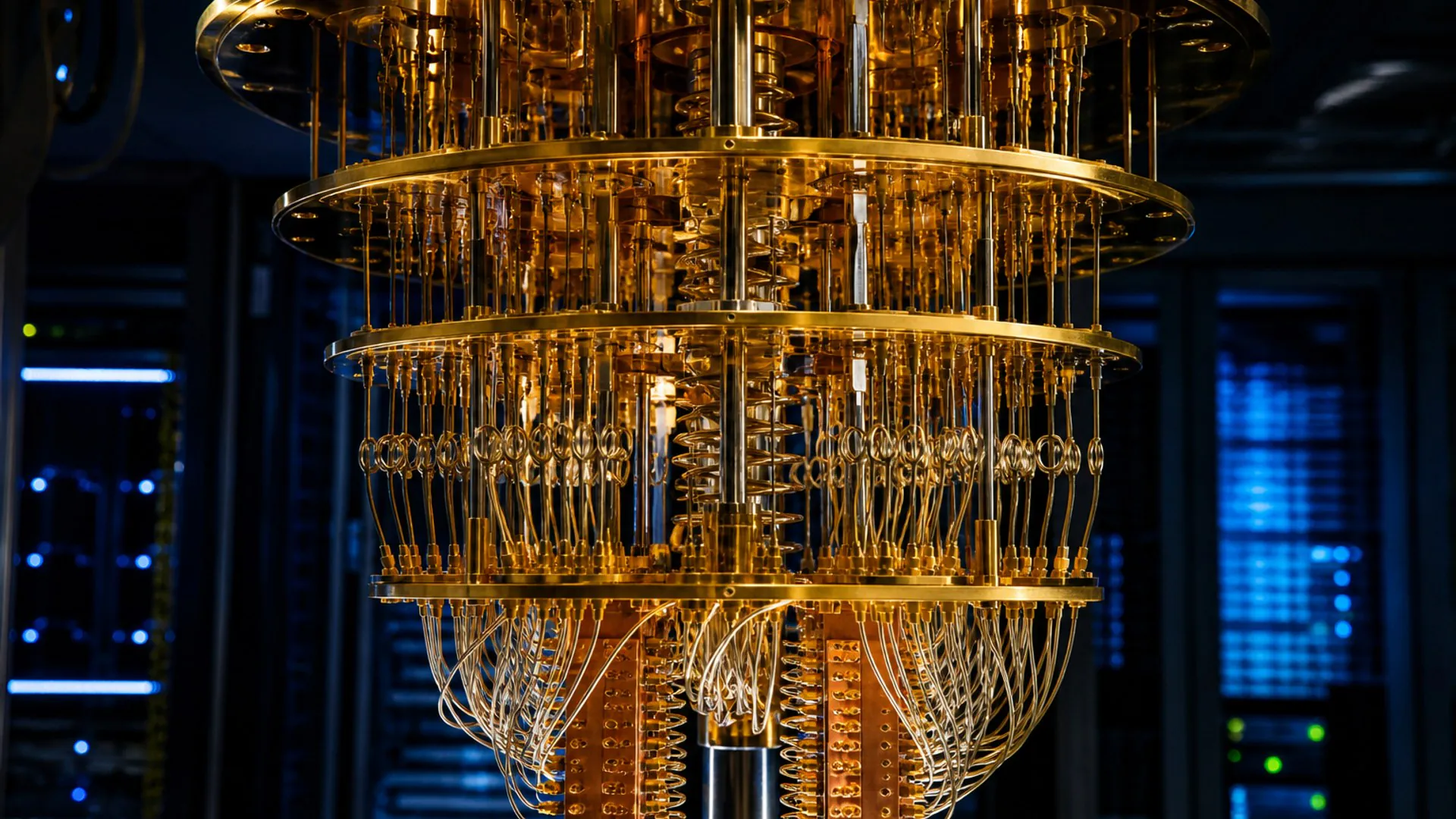
Oracle and Quantinuum announced a multi-year partnership on August 11, 2026, to install the Helios quantum computer inside a US-based Oracle Cloud Infrastructure (OCI) AI data center. Expected to preview in the coming months, the managed OCI quantum service will allow enterprise customers to run hybrid quantum-classical workloads. Quantinuum CEO Rajeeb Hazra noted the integration creates a "deeply integrated environment for hybrid workloads" to accelerate commercial adoption. Instead of managing physical hardware, developers can access Helios directly alongside OCI's existing GPU and high-performance computing resources.
Helios is a third-generation trapped-ion machine launched in November 2025. It features 98 fully connected physical qubits and has demonstrated operations with 48 logical qubits. Quantinuum claims it is the most accurate commercial quantum computer available, boasting an average two-qubit gate fidelity of 99.921% and a single-qubit gate fidelity of 99.9975%. Its control system integrates NVIDIA Grace Hopper GPUs, pairing Quantinuum's Guppy programming language with NVIDIA's CUDA-Q platform to perform real-time error correction.
For practitioners, the deployment simplifies the transition from simulating quantum circuits on classical hardware to executing them on physical QPUs under standard OCI security and governance controls. It also offers massive energy advantages for specific subroutines. While leading supercomputers draw between 16 and 39 megawatts, a base Helios unit consumes under 40 kilowatts, or roughly 60 kilowatts without its HVAC system. This allows developers to offload complex calculations to a highly efficient processor rather than running them on power-hungry classical clusters.
The deal marks a major milestone for Quantinuum, which recently went public in a $1.7 billion initial public offering. The company reported Q2 2026 revenues of $8 million, a 279% year-over-year increase, and projects full-year 2026 revenue between $28 million and $32 million. With $2.1 billion in cash and short-term investments as of June 30, 2026, Quantinuum is progressing toward its roadmap, which includes the Sol system in 2027 and the fault-tolerant Apollo system in 2029.
This is our own summary of reporting by Unite.AI