Three in Four Americans Oppose Local Data Center Builds
A staggering 75 percent of Americans now oppose local data center construction, posing a massive infrastructure bottleneck for tech companies racing to build out artificial intelligence.
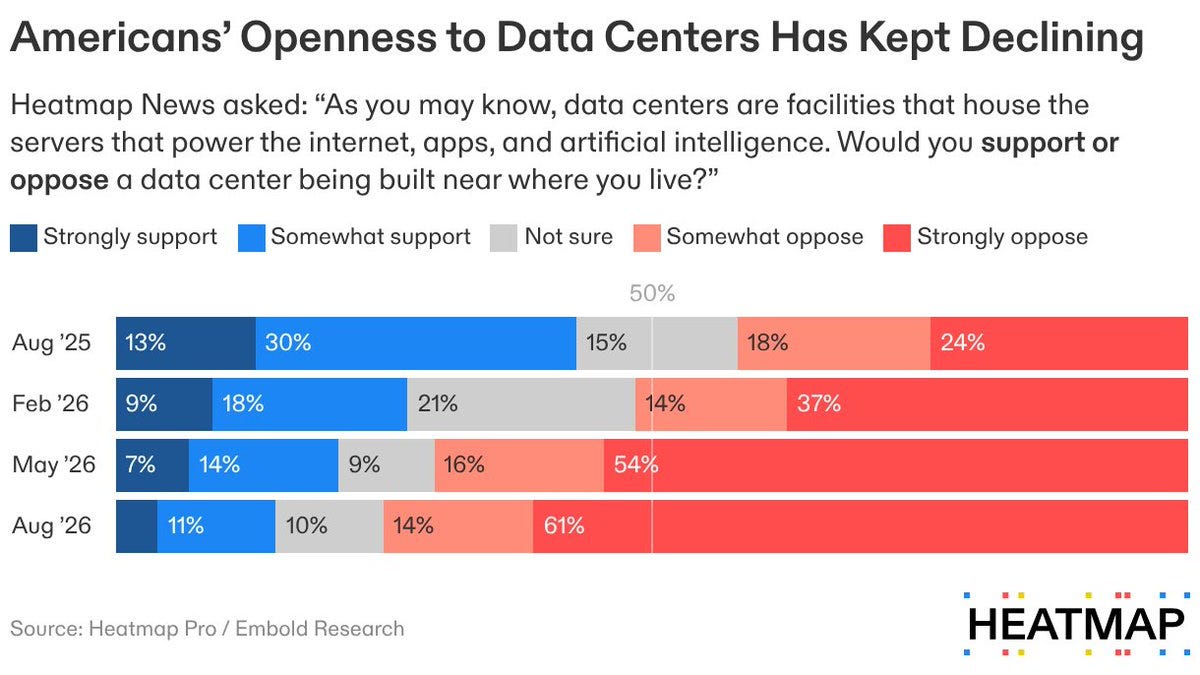
Public resistance to data center development has reached critical levels in the United States, threatening the physical expansion required for the artificial intelligence boom. According to recent polling data, 75 percent of Americans oppose local data center development despite the potential economic benefits. A Gallup report further reveals that 70 percent of the public objects to these buildouts. Interestingly, only 41 percent of this opposition is tied to AI-related anxieties, and a mere 14 percent stems directly from negative views of AI itself.
The backlash is driven by a complex mix of local grievances, general distrust of tech giants, and fears of economic displacement. Many residents worry about concrete local impacts such as noise, aesthetic degradation, declining property values, and water consumption, even when some environmental concerns are statistically overstated. Furthermore, the public remains highly skeptical of the industry's employment promises. This skepticism is compounded by high-profile layoffs, including the 170,000 tech workers let go this year, which fuels the perception that AI infrastructure ultimately automates away human livelihoods.
This friction is not entirely new, echoing historical resistance to the 1965 National Data Center proposal and even rural electrification campaigns in 1937. Today, tech giants like Meta and Google attempt to soothe local communities with community programs, such as Meta's initiatives in Mount Pleasant, Wisconsin. However, these efforts often fail to satisfy residents who feel entitled to a larger share of the financial gains or suspect backroom deals when officials sign non-disclosure agreements.
For AI practitioners and infrastructure developers, this widespread hostility represents a major operational hurdle. Companies can no longer assume that massive capital investments will easily buy local permission. To secure the power and land necessary for next-generation models, developers must move beyond generic public relations campaigns. They will need to offer concrete, legally binding local benefits, address grid capacity concerns directly, and potentially seek out more receptive jurisdictions that prioritize tax revenues over local disruption.
This is our own summary of reporting by Don't Worry About the Vase