AI Engineers Adopt Leaner Toolkits for 2026 Systems
As generative AI systems mature, engineers are abandoning bloated prototype setups in favor of a standardized, six-layer minimal toolkit designed for reliable production.
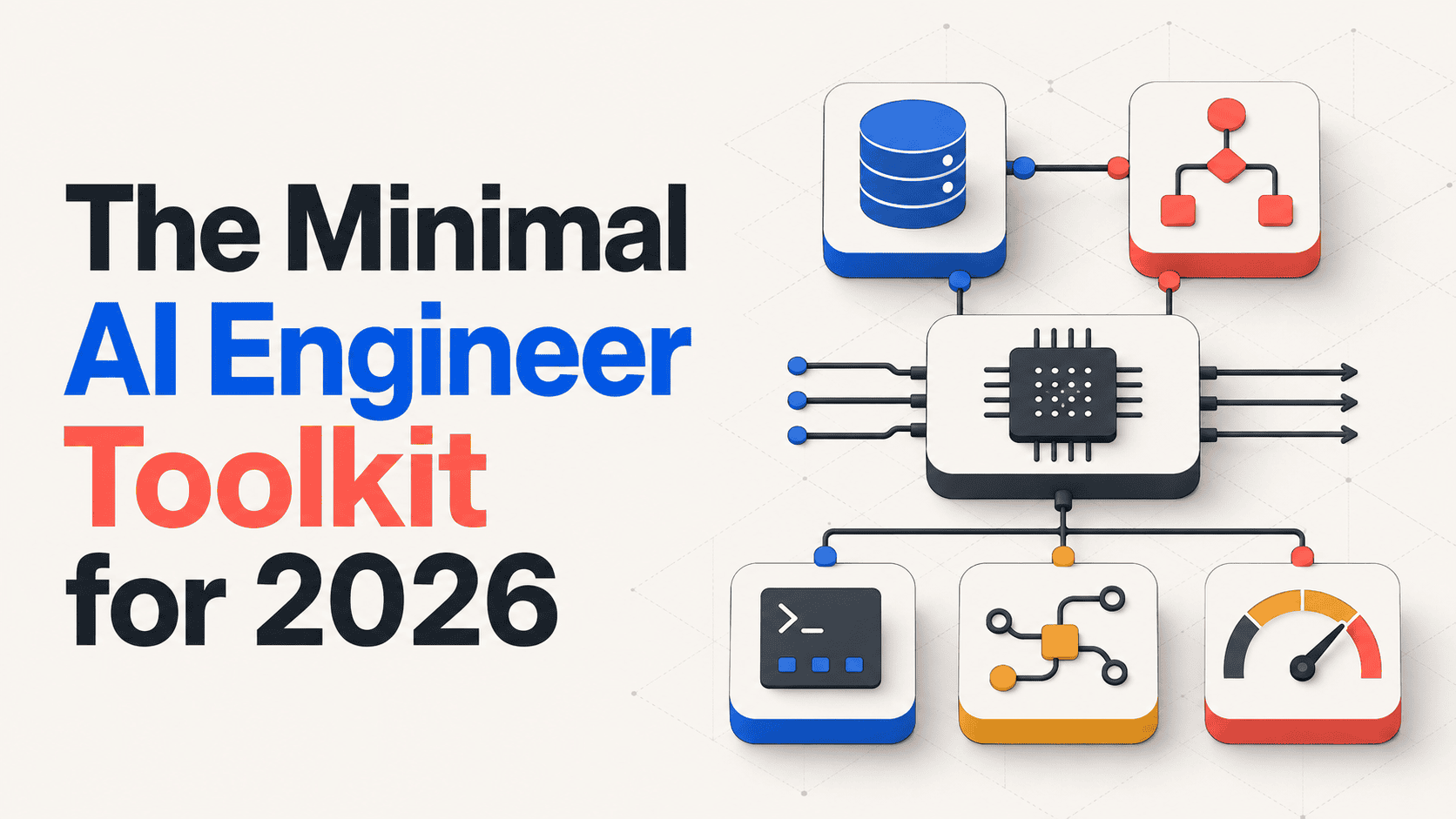
The bloated, complex architectures that characterized early generative AI prototyping have given way to a streamlined, production-ready stack for AI engineers. This modern toolkit prioritizes explicit control and standardized primitives over opaque abstractions. For orchestration, developers are splitting workflows by complexity. Stateful, multi-turn applications rely on low-level, code-first graph frameworks like LangGraph and Burr to manage execution nodes and conditional routing. Conversely, asynchronous, event-triggered pipelines are managed via visual automation platforms like n8n, which treat models as first-class components.
Connecting these systems to external data has been simplified by the Model Context Protocol, an open standard acting as a universal interface between reasoning engines and servers. This allows developers to focus on governance rather than writing custom API wrappers. Furthermore, the development loop has moved offline. Engineers are utilizing local inference engines like Ollama or MLX to run small language models under 10 billion parameters, such as Qwen3, Gemma 3, and Phi. This local setup eliminates API costs and latency during initial testing, with OpenAI-compatible endpoints allowing a seamless transition to cloud models later.
To ensure reliability before deployment, teams are integrating evaluation frameworks like Promptfoo, LangSmith, or Braintrust directly into their CI/CD pipelines. These tools use a secondary model to grade outputs, often requiring a 95 percent pass rate before code is merged. Downstream errors are further mitigated by enforcing structured outputs. Developers use token-level constraints via Outlines or vLLM Guided Decoding to force compliance with Pydantic schemas, or they use Instructor to validate and retry API calls. Finally, Git Worktrees allow engineers to manage multiple experimental branches simultaneously without disrupting local model environments.
This is our own summary of reporting by KDnuggets