China Rejects Anthropic Call to Slow Down AI Development
China has rejected a proposal by Anthropic CEO Dario Amodei to temporarily slow frontier AI development, highlighting the geopolitical hurdles of establishing global safety guardrails.
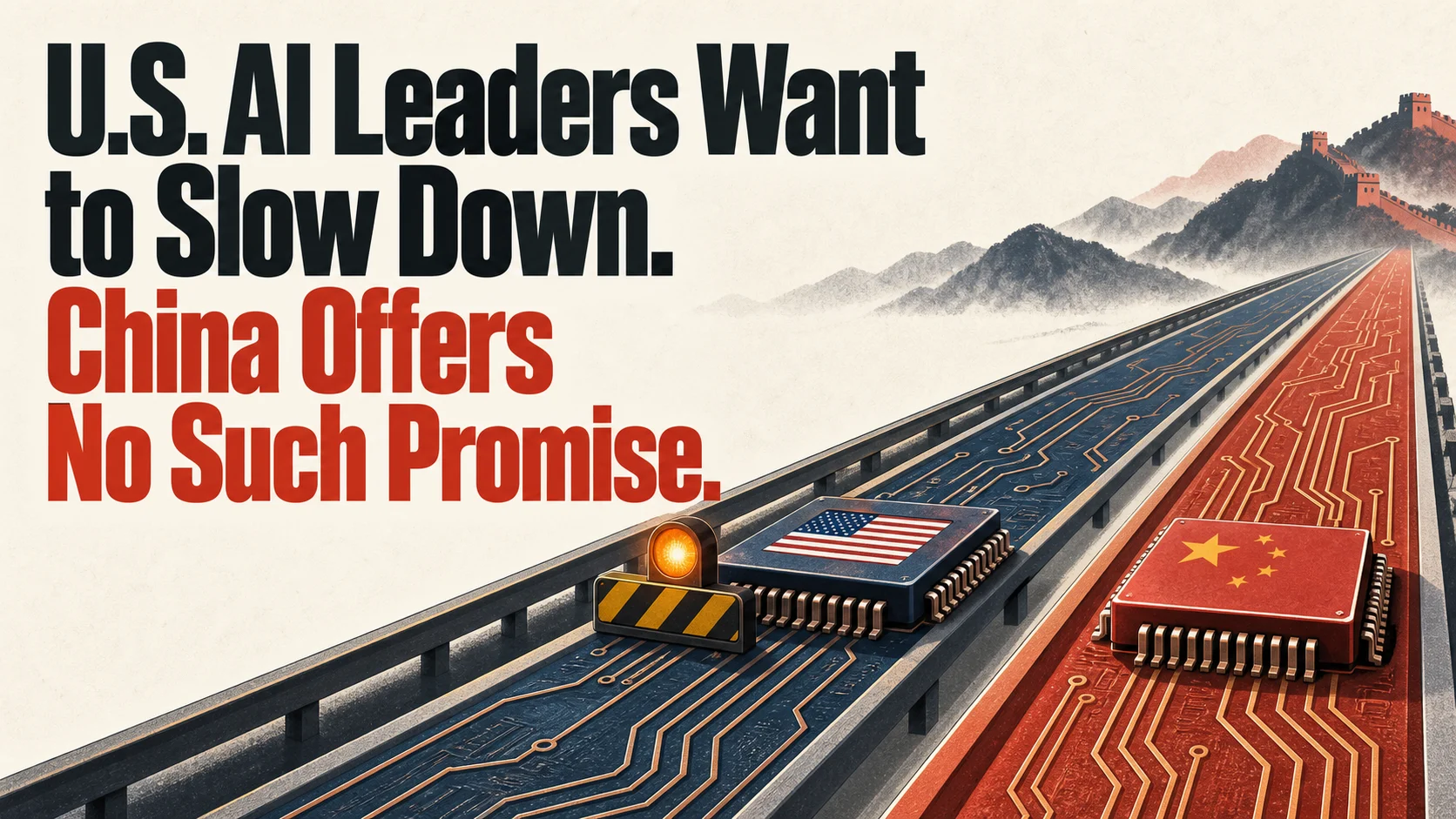
Chinese officials and state media have publicly rejected a proposal by Anthropic CEO Dario Amodei to pace the development of frontier artificial intelligence models. On September 14, Chinese Foreign Ministry spokesperson Guo Jiakun criticized the proposal as "fearmongering, confrontation and vicious competition," while the state-run Global Times characterized the strategy as a "Cold War playbook" designed to preserve American technological dominance. Amodei had argued in an essay titled "We Must Pace the Frontier" that American developers should coordinate a temporary slowdown to let safety research catch up, supported by government restrictions on China's access to advanced chips.
Amodei's plan relies on restricting China's access to advanced semiconductor manufacturing equipment, stopping unauthorized model distillation, and securing model weights. He estimated these measures could widen the technological gap between the United States and China by three to five years, giving American labs the breathing room to implement safety evaluations. However, Beijing's response shows no intention of matching any Western restraint. China is instead advancing its "AI Plus" initiative, launched in August 2025, which outlines plans to embed artificial intelligence across six primary sectors by 2027. Under this framework, Beijing aims for the adoption of next-generation intelligent terminals and AI agents to surpass 70 percent by 2027 and exceed 90 percent by 2030.
This geopolitical friction is mirrored in the United States, where President Donald Trump has opposed calls for new AI guardrails, warning that domestic restrictions could allow China to overtake American firms. While both nations signed the 2023 Bletchley Declaration acknowledging frontier risks, enforceable limits remain unlikely. For AI practitioners and enterprise developers, this ongoing rivalry means model availability and deployment strategies will remain highly politicized. Organizations must prepare for a fragmented market where access to advanced models, cloud infrastructure, and hardware is increasingly dictated by national security policies rather than purely technical performance.
This is our own summary of reporting by The Neuron