Google DeepMind launches AlphaGenome Atlas
Google DeepMind has launched AlphaGenome Atlas, a massive one-petabyte dataset predicting the molecular effects of nine billion DNA mutations to help scientists understand rare diseases.
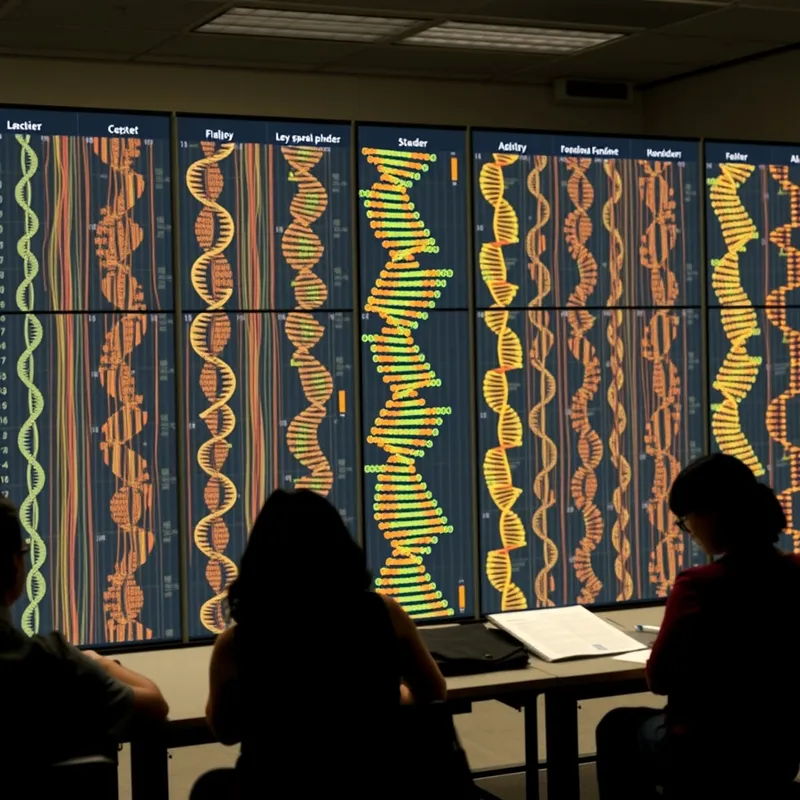
Google DeepMind has released AlphaGenome Atlas, a comprehensive platform containing molecular predictions for nine billion single-nucleotide variants. This represents every possible single-letter change in the human genome. The massive one-petabyte dataset is more than 30 times larger than the AlphaFold Database. It is designed to help researchers understand how genetic mutations affect molecular biology, particularly in the non-coding regions that regulate gene activity.
For practitioners, the platform introduces the AlphaGenome Variant Impact (AVI) score. This metric combines predictions from the AlphaGenome model and AlphaMissense, which predicts the impact of protein-altering variants, into a single number. The AVI score works across both the two percent of the genome that codes for proteins and the remaining 98 percent of non-coding regions. It is accompanied by feature attributions that highlight specific disrupted processes like RNA splicing or gene expression, alongside a library of over 2,500 recurrent DNA sequence motifs.
Early academic collaborators have already demonstrated the utility of the atlas. Researchers at the Broad Institute used the AVI score to identify a previously overlooked mutation in the DNM1 gene that causes epileptic encephalopathy by creating an incorrect splice site. Meanwhile, a researcher at the University of Exeter applied the dataset to genetic data from over 54,000 UK Biobank participants, uncovering 22 percent more non-coding genetic associations than standard methods. This analysis pinpointed regulatory variants for proteins like PLA2G7 and EGLN1, and identified 19 genetic regions linked to body mass index by focusing on the top one percent of predicted non-coding variants.
AlphaGenome Atlas is currently available for non-commercial academic research through a free website portal, an API, and as a skill in Google Antigravity. Google plans to make the dataset available for commercial use on Google Cloud soon. The underlying AlphaGenome base model is already accessible on GitHub and the AlphaGenome API for academic use, and via Model Garden on Google Cloud for commercial applications.
This is our own summary of reporting by DeepMind Blog

%22%3E%0A%3Cstop%20offset%3D%220%25%22%20stop-color%3D%22%23233043%22%2F%3E%3Cstop%20offset%3D%22100%25%22%20stop-color%3D%22%234c6180%22%2F%3E%0A%3C%2FlinearGradient%3E%3C%2Fdefs%3E%0A%3Crect%20width%3D%22800%22%20height%3D%22500%22%20fill%3D%22url(%23g)%22%2F%3E%0A%3Cg%20stroke%3D%22%23ffffff%22%20stroke-opacity%3D%220.10%22%20stroke-width%3D%222%22%3E%0A%3Cline%20x1%3D%22-200%22%20y1%3D%22500%22%20x2%3D%22100%22%20y2%3D%220%22%2F%3E%3Cline%20x1%3D%22-60%22%20y1%3D%22500%22%20x2%3D%22240%22%20y2%3D%220%22%2F%3E%3Cline%20x1%3D%2280%22%20y1%3D%22500%22%20x2%3D%22380%22%20y2%3D%220%22%2F%3E%3Cline%20x1%3D%22220%22%20y1%3D%22500%22%20x2%3D%22520%22%20y2%3D%220%22%2F%3E%3Cline%20x1%3D%22360%22%20y1%3D%22500%22%20x2%3D%22660%22%20y2%3D%220%22%2F%3E%3Cline%20x1%3D%22500%22%20y1%3D%22500%22%20x2%3D%22800%22%20y2%3D%220%22%2F%3E%3Cline%20x1%3D%22640%22%20y1%3D%22500%22%20x2%3D%22940%22%20y2%3D%220%22%2F%3E%3Cline%20x1%3D%22780%22%20y1%3D%22500%22%20x2%3D%221080%22%20y2%3D%220%22%2F%3E%0A%3C%2Fg%3E%0A%3Ctext%20x%3D%2248%22%20y%3D%22430%22%20font-family%3D%22Helvetica%2CArial%2Csans-serif%22%20font-size%3D%22132%22%20font-weight%3D%22800%22%0A%20fill%3D%22%23ffffff%22%20fill-opacity%3D%220.22%22%20letter-spacing%3D%22-4%22%3ESW%3C%2Ftext%3E%0A%3C%2Fsvg%3E)