Trump Administration Targets AI Critics as Foreign Agents
The Trump administration and the Justice Department are threatening criminal charges against domestic opponents of AI data centers, framing local protests as Chinese influence operations.
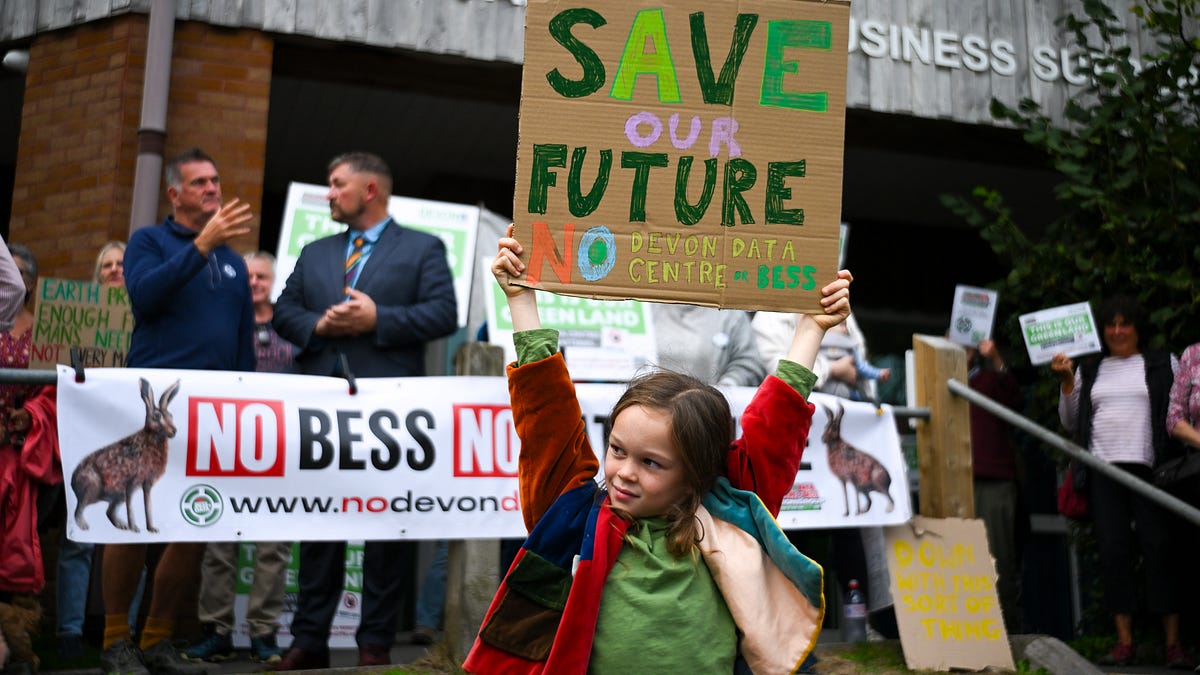
The U.S. Department of Justice recently issued a warning instructing citizens and noncitizens that participating in public activities, including demonstrations, that further the goals of a foreign power without notifying the government could lead to criminal prosecution. This directive aligns with social media posts from President Trump, who declared that opposition to AI data centers is a "SICK conspiracy" benefiting China. Trump warned that the administration would use the existing civil and criminal justice systems to target what he described as bad actors in the AI sector.
This federal crackdown follows pressure from congressional Republicans. In June, Senate Intelligence Committee Chairman Tom Cotton requested that the Justice Department launch an investigation under the Foreign Agents Registration Act. Cotton specifically pointed to Neville Roy Singham, a Shanghai-based American tech mogul, as a suspected conduit for Chinese influence. Similarly, Representative Brett Guthrie asked FBI Director Kash Patel for briefings on foreign campaigns targeting American data centers. Prominent figures like venture capitalist David Sacks and investor Kevin O'Leary, who is planning a $100 billion data center in Utah, have also claimed that foreign adversaries are funding local opposition.
However, polling suggests that skepticism toward AI infrastructure is widespread and domestic. A March Gallup poll revealed that 71 percent of Americans oppose having an AI data center built in their local area, compared to 53 percent who oppose local nuclear plants. Furthermore, a Pew Research Center survey of over 5,000 adults found that 40 percent believe AI will harm society over the next two decades, while 63 percent feel the technology is advancing too quickly.
The administration has previously used national security arguments to shield AI developers from local challenges. In June, the Justice Department intervened in an NAACP lawsuit against Elon Musk's xAI regarding unpermitted gas turbines at a Tennessee data center. In that case, the Pentagon's chief digital and AI officer, Cameron Stanley, filed a declaration asserting that the Grok chatbot was "a matter of paramount national security" to justify dismissing the environmental complaint.
This is our own summary of reporting by Hacker News