The Neuron Maps AI Learning Pathway Across 165 Videos
The Neuron has published a structured learning roadmap to help developers and users navigate its library of 165 video streams, emphasizing staged progression over passive model tracking.
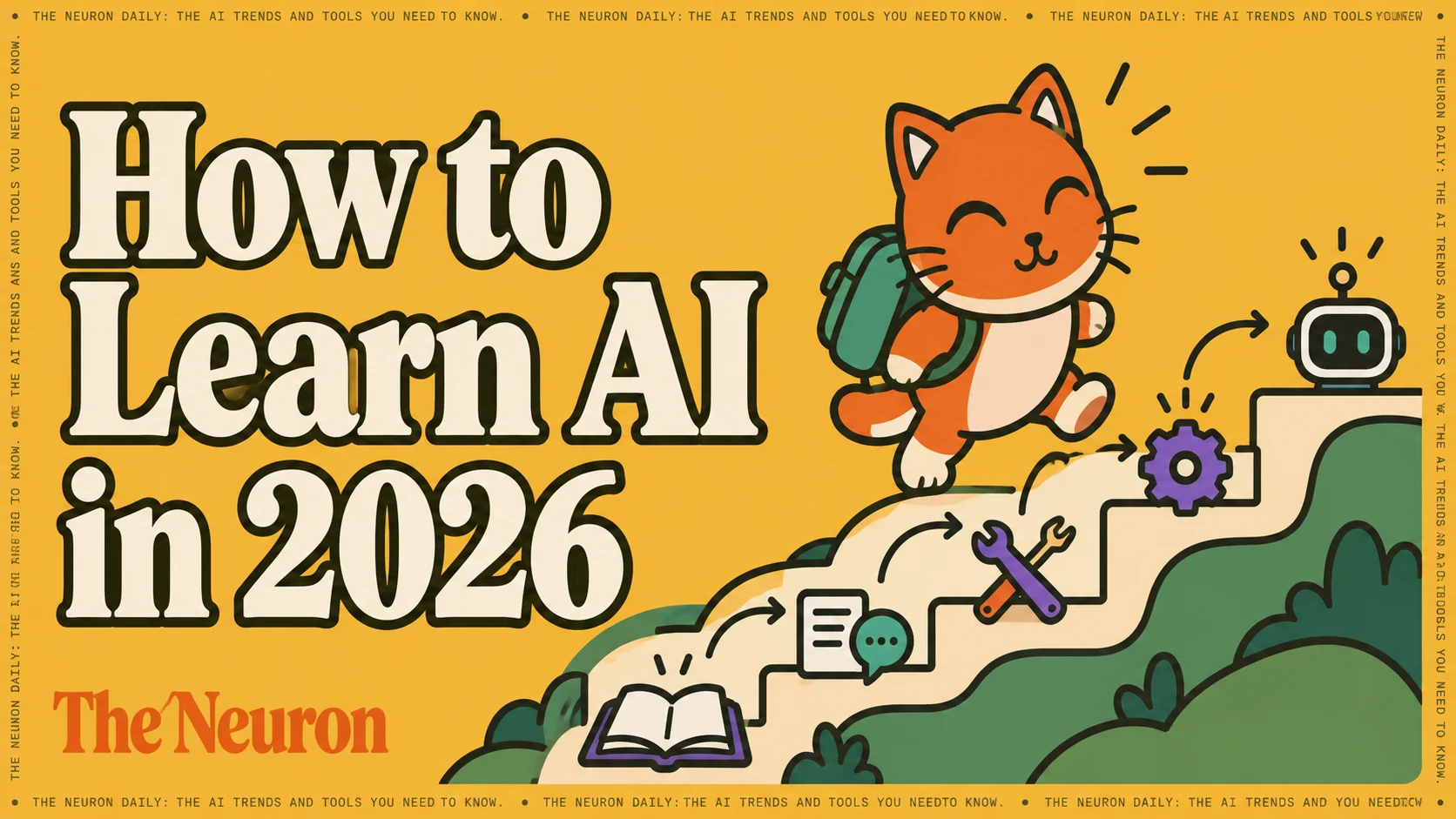
AI publication The Neuron has organized its vast video archive into a four-stage curriculum designed to streamline how professionals acquire practical artificial intelligence skills. Facing a dense library of 165 long-form YouTube broadcasts as of October 2026, the outlet created a skill-tree framework intended to move learners from basic tool mechanics to fully autonomous systems without requiring them to watch historical model coverage.
The curriculum structures progression around a distinct hierarchy: organizing project context, refining prompts, turning repeated processes into reusable skills, setting up scheduled automations, and deploying goal-driven agents. Rather than pushing users directly into autonomous software, the roadmap guides learners through foundational streams before branching into technical applications. Specialized tracks cover running local hardware using LM Studio and Docker, mastering video generation with LTX-2.5, building real-time voice tools via LiveKit, and deploying agentic platforms like OpenClaw 2.0 or Claude Cowork and Code. Job-specific branches incorporate enterprise software such as ClickUp Brain Alongside step-by-step guidance for publishing apps to the App Store using GitHub.
The roadmap explicitly separates enduring concepts from rapidly changing model updates. While practitioners tracking high-end performance can explore technical stream comparisons covering GPT-6 Sol, Claude Opus 5.5, GPT-5.6, and Claude Opus 4.7, these broadcasts are positioned as real-time benchmark reports rather than foundational requirements. Major milestone breakdowns, such as coverage of OpenAI DevDay 2026, remain secondary to mastering fundamental context management.
For practical software developers and workflow builders, this structured sequence reduces the friction of adopting AI tools. By advising users to deploy the simplest suitable approach before adding multi-step agent bureaucracy, the framework helps workers systematically convert routine, manual prompts into scalable automations.
This is our own summary of reporting by The Neuron