OpenAI Math Model Solves Barnette's Conjecture
An OpenAI mathematics initiative has reportedly solved Barnette's Conjecture, a famous graph theory problem that had remained unsolved for decades, sparking mixed emotions among researchers.
The field of mathematics is reacting to reports that an OpenAI system has successfully proven Barnette's Conjecture, a long-standing problem in graph theory. Listed as problem 180 in a collection of mathematical challenges, the conjecture's apparent resolution by AI represents a major milestone for machine learning in symbolic reasoning and formal mathematics.
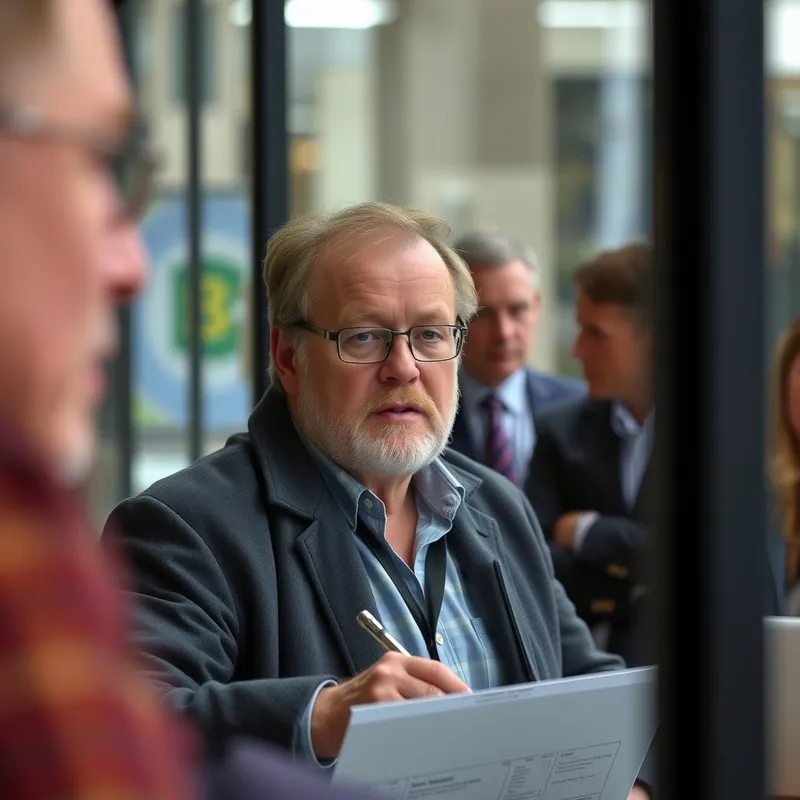
The breakthrough has elicited complex reactions from the mathematical community, particularly from researchers who have dedicated portions of their careers to the problem. Jake Boggan, a graph theory researcher who studied the subject in Budapest, shared that he had worked on Barnette's Conjecture on and off for 24 years. Boggan noted that he had spent thousands of hours on the problem and even briefly believed he had solved it himself during the previous summer.
For practitioners and researchers, the automated proof of such a deeply studied conjecture highlights the accelerating capability of AI models to tackle complex, abstract reasoning tasks that have resisted human efforts for decades. While the achievement demonstrates the utility of AI as a tool for scientific discovery, it also introduces a profound shift in how mathematicians interact with unsolved problems. Boggan described the news of the AI's solution as bringing a sense of melancholy, comparing the feeling to learning of a sudden tragedy involving someone from his past.
As OpenAI continues to develop its mathematical capabilities, the resolution of problem 180 suggests that more historical mathematical conjectures may soon fall to automated systems. This shift will likely force the academic community to re-evaluate the role of human intuition and labor in pure mathematics.
This is our own summary of reporting by Simon Willison