Simile AI raises $2B to simulate human behavior
Simile AI has raised a $2 billion Series B round to scale its behavioral foundation models, allowing enterprises to replace human focus groups with highly accurate digital twins.
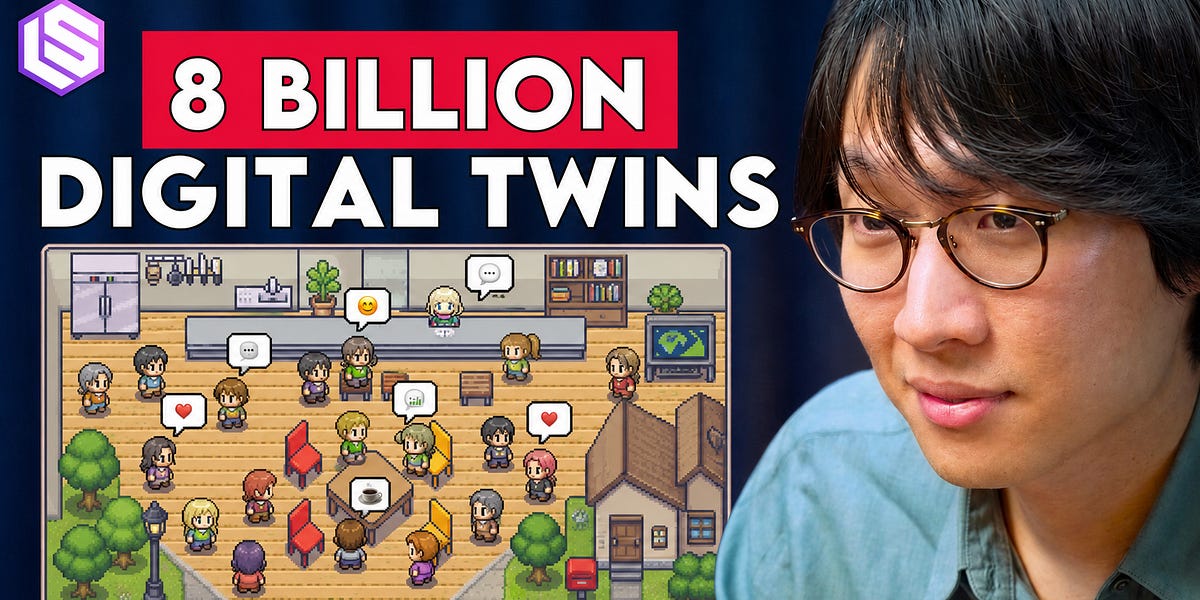
Simile AI has secured a $2 billion Series B funding round backed by GreenOaks, Index Ventures, Fei-Fei Li, and Andrej Karpathy. Led by co-founder and CEO Joon Sung Park, the startup builds behavioral foundation models designed to simulate human actions and decisions. The company already runs tens of millions of simulations for Fortune 100 clients, including CVS, achieving an accuracy rate of 85% to 99% compared to traditional human focus groups.
The technology traces its roots to Park's landmark 2023 Stanford research paper on Generative Agents, widely known as the Smallville paper, which has garnered 7,200 citations on Google Scholar. While that paper and its precursor, Social Simulacra, focused on sandbox environments, Simile AI now builds digital twins of real people. In tests involving digital twins of 1,000 real individuals, the company achieved 85% behavioral accuracy, meaning the AI reproduced human attitudes as consistently as the actual participants reproduced their own responses.
To train these behavioral models, Simile AI relies on three distinct data categories rather than just web scraping. The startup collects qualitative interview data, observational and transaction records, and results from randomized controlled trials. By placing consented participants in virtual labs with real stakes, such as actual product deliveries, Simile AI captures the causal mechanisms behind human choices. This approach allows the models to replicate human biases and irrationalities that standard, optimization-focused frontier models often miss.
For industry practitioners, this shift from simple prediction to active simulation changes how products and policies are tested. Instead of relying on slow, expensive human panels for market research, developers and executives can query representative synthetic populations to run A/B tests or concept trials. Ultimately, Simile AI aims to scale these behavioral simulations to model all 8 billion people on Earth, providing a data-center-scale sandbox to test societal-level outcomes before they are deployed in the real world.
This is our own summary of reporting by Latent Space


