Anthropic Standard Lets Claude Control Lab Hardware
Anthropic has launched a research preview of its Model Hardware Standard, a new specification that allows AI agents like Claude to directly control and automate complex laboratory equipment.
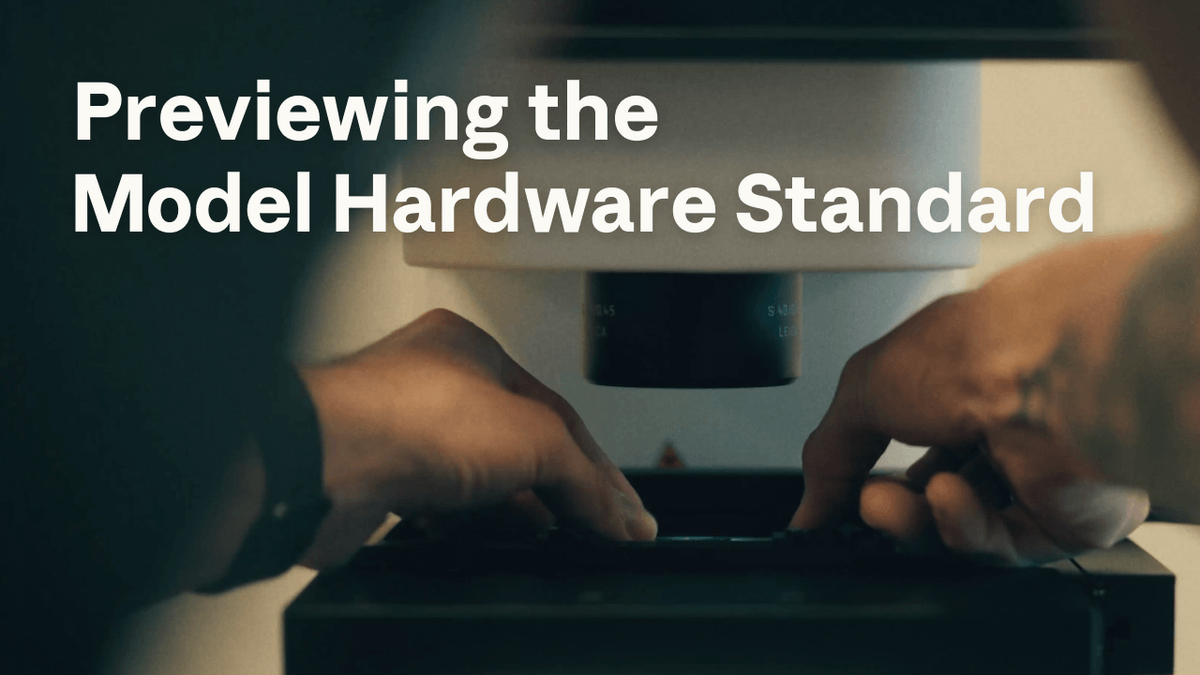
Anthropic has introduced a research preview of the Model Hardware Standard (MHS), a unified interface designed to help AI agents interact with physical laboratory and manufacturing equipment. Instead of requiring weeks of custom integration code for every microscope or robotic arm, MHS uses standardized drivers with simple read and write primitives, natural-language device tags, and compatibility with the Model Context Protocol (MCP). This allows models like Claude to orchestrate diverse instruments out of the box, reducing setup times from weeks to hours.
Early pilots demonstrate significant performance gains. At QuEra Computing, Claude automated laser relocking on a quantum computer, achieving a 99.3% success rate across 700 trials, compared to a 58% success rate from a bespoke script built by four engineers. Claude optimized PID tuning over 363 experiments, reducing residual error from 15.7 mV to 1.55 mV and maintaining a lock for 19 hours, whereas expert-tuned parameters unlocked 1.6 times per hour. At Genentech, Claude optimized pipetting flow rates for water at roughly 140 microliters per second and viscous BSA at about 10 microliters per second. Carnegie Mellon researchers integrated a CyBio liquid handler, Varioskan plate reader, and robotic arm across three incompatible computers in just eight hours.
Other deployments include HHMI Janelia, which simplified a two-photon microscopy rig from seven vendor programs to a single click, and Tetsuwan Scientific, which used MHS to run qPCRs for fecal contamination in San Pedro Creek. Despite these successes, Anthropic noted that AI models still lack physical intuition. For instance, Claude repeatedly retried failed operations in the same plate well when bubbles formed during Genentech's tests, requiring human intervention to explain the physical error.
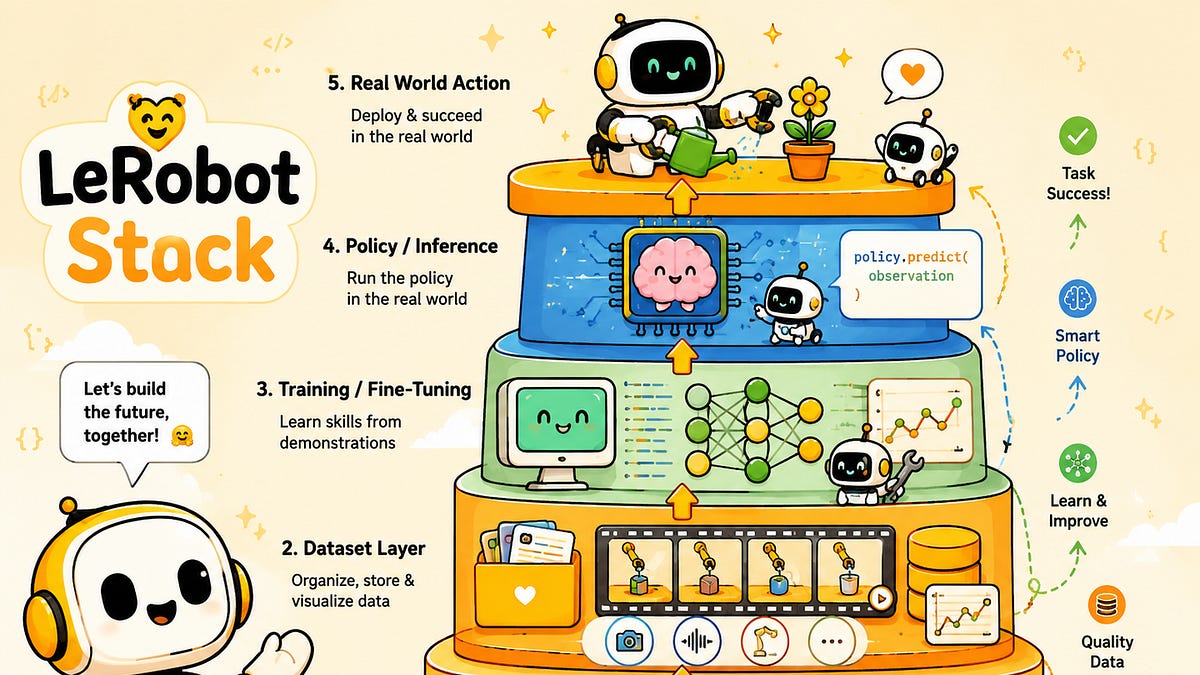
Anthropic is collaborating with several launch partners, including AWS, Tecan, Universal Robots, Doosan Robotics, QIAGEN, Hugging Face LeRobot, and Raspberry Pi. Currently, developers can access the system via a waitlist at modelhardwarestandard.com, with plans for an open-source release after safety evaluations are complete. For practitioners, this standard promises to turn physical hardware into easily programmable APIs, shifting the bottleneck of scientific automation from custom driver development to high-level AI orchestration.
This is our own summary of reporting by AlphaSignal